
Views: 0 Author: Site Editor Publish Time: 2026-10-15 Origin: Site


Many observers look at a standard electrical connector and see only a simple piece of metal. However, viewing a Cable Lug as a mere commodity completely ignores its role as a critical point of failure in high-stakes infrastructure. Specifying the correct termination directly impacts system longevity, strict safety compliance, and ongoing maintenance overhead. When these connections degrade, you often face thermal runaway, severe equipment damage, and catastrophic facility outages. We wrote this comprehensive guide to provide procurement teams and electrical engineers with an evidence-based framework. Here, you will discover exactly how to evaluate, select, and successfully source these vital components across demanding industrial environments. By thoroughly understanding the distinct mechanical and environmental stressors at play, you can confidently secure electrical connections that easily outlast the expensive equipment they power.
Matching lug material and plating (e.g., tinned copper) to the specific environmental stressor (corrosion, vibration, thermal cycling) prevents premature system failure.
Renewable energy, marine, and heavy manufacturing sectors require distinct evaluation criteria for voltage limits and environmental resilience.
Procurement decisions must balance unit cost with UL/IEC compliance, strict dimensional tolerances, and crimping tool compatibility to ensure operational safety.
Galvanic corrosion and improper crimping are the top implementation risks, mitigated only through strict specification and standardized installation protocols.
Electrical networks rely heavily on their weakest links. A poorly specified termination creates hidden operational vulnerabilities across your entire facility. We must examine exactly how terminal connectivity drives core business outcomes.
Selecting the wrong Cable Lug initiates a dangerous chain reaction. First, a mismatched or poorly crimped connector introduces elevated electrical resistance. Increased resistance naturally generates excess heat during peak load operations. This localized heating accelerates metal oxidation. Oxidation then breeds even higher resistance. Engineers call this destructive cycle thermal runaway. Eventually, the connection melts, catches fire, or fails completely.
These failures cause immediate unplanned downtime. A single melted terminal can easily shut down an automated manufacturing line for hours. Furthermore, regulatory bodies often issue severe compliance penalties if investigators trace facility fires back to non-compliant electrical hardware. You cannot afford to treat these components as afterthoughts.
Procurement teams need objective standards to evaluate connector quality. A successful procurement outcome hinges on three distinct factors. First, you need verifiable material purity. High-grade electrolytic copper guarantees maximum conductivity. Second, the connector must demonstrate long-term mechanical stability under heavy loads. It should never deform during intense thermal expansion. Finally, engineers require seamless integration into existing installation tooling. If your maintenance team uses specific hydraulic hex crimpers, your purchased components must match those exact die profiles.
Connection integrity fundamentally dictates the stability of the entire electrical network. Power generation equipment might operate perfectly. Transmission lines might carry current without issue. However, if the termination points fail to transfer that current efficiently into the switchgear, the entire system struggles. Strong, correctly specified connectors form the physical backbone of your infrastructure. They absorb mechanical shocks, resist environmental degradation, and keep electrons flowing safely into critical machinery.
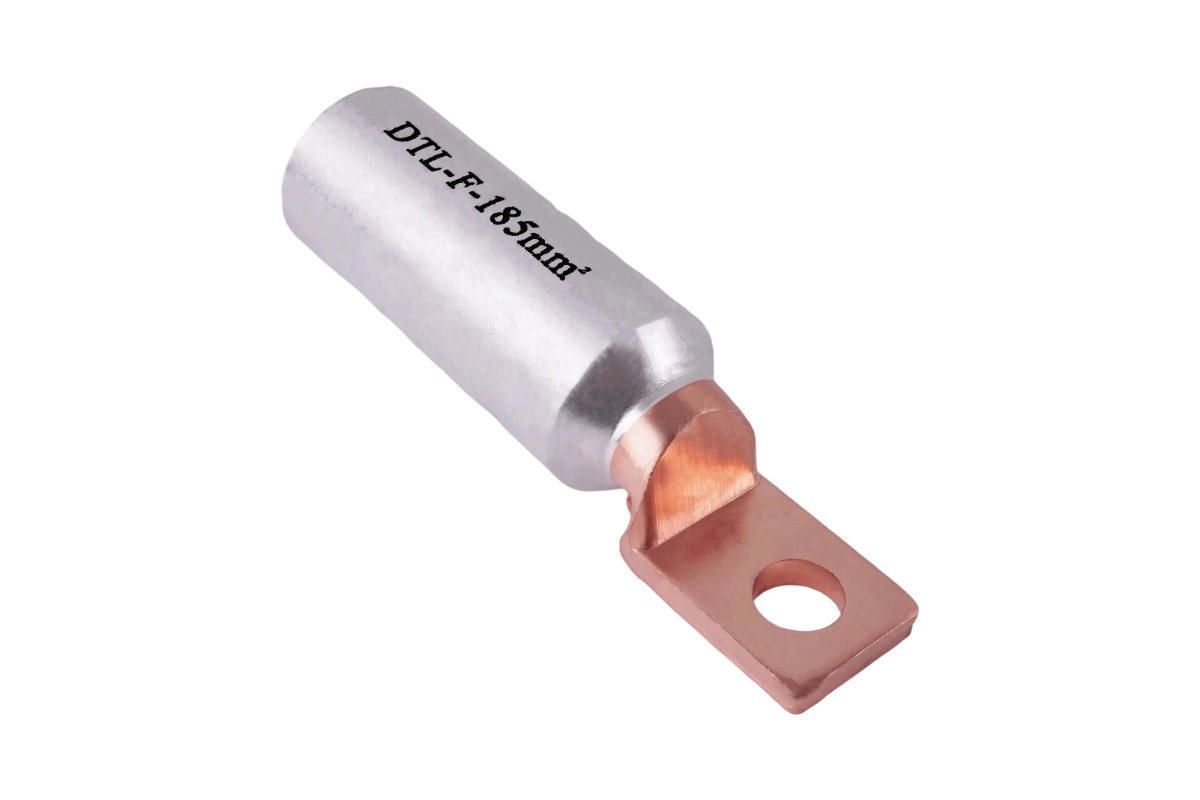
Different industries expose electrical systems to vastly different stressors. You must tailor your hardware choices to match the specific environmental realities of each application.
The renewable energy sector pushes electrical components to their absolute physical limits. Solar farms sit in baking deserts, while wind turbines endure relentless coastal gales.
Requirement: Solar and wind installations demand high-voltage handling capabilities. These environments also expose hardware to extreme UV radiation and violent thermal cycling. Ambient temperatures might swing from freezing at night to blistering heat during peak afternoon sun.
Solution: Engineers should specify heavy-duty tubular copper connectors. These robust designs handle severe thermal expansion without loosening their grip on the wire strands. Additionally, fully sealed barrels prevent moisture ingress during intense weather events.
Offshore oil rigs, commercial vessels, and port facilities present a uniquely hostile environment for exposed metals. Saltwater acts as a highly aggressive corrosive agent.
Requirement: Systems need absolute protection against salt spray, constant heavy vibration, and rapid galvanic corrosion. Traditional bare copper degrades rapidly when exposed to humid, salty ocean air.
Solution: Procurement must demand thickly tinned copper models. The tin plating serves as a sacrificial barrier against oxidation. Furthermore, installers should use closed-end designs combined with marine-grade heat shrink tubing to seal out moisture completely.
Industrial factories operate heavy machinery consuming massive amounts of baseline power. Conveyor systems, stamping presses, and robotic arms generate continuous mechanical disruption.
Requirement: Connections must survive high-frequency motor vibrations, sudden power surges, and exposure to aggressive industrial chemicals. Flexible welding cables often power moving robotic parts, requiring specialized terminations.
Solution: Bell-mouthed or flared-end connectors provide the best defense here. The flared opening allows flexible, fine-stranded cables to enter the barrel without catching or fraying. Heavy wall thicknesses ensure the crimp holds tight despite constant mechanical shaking.
Industry Sector |
Primary Environmental Stressor |
Critical Performance Requirement |
Recommended Material & Design Solution |
|---|---|---|---|
Renewable Energy |
Extreme thermal cycling, high UV exposure |
Thermal expansion tolerance, high voltage capacity |
Heavy-duty tubular copper, long barrel design |
Marine & Offshore |
Saltwater spray, high humidity, vibration |
Maximum corrosion resistance, moisture sealing |
Tinned copper, closed-end barrel, epoxy sealed |
Heavy Manufacturing |
High-frequency motor vibration, flex stress |
Mechanical retention, fine-strand compatibility |
Flared-end (bell-mouth) design, thick wall casting |
Telecommunications |
Space constraints, continuous low-level loads |
Tight dimensional tolerances, low resistance |
Standard gauge tinned copper, narrow tongue |
Engineers cannot rely on guesswork when evaluating metallurgy. The underlying metal and its protective surface treatment dictate how long a connection survives.
Copper and aluminum dominate the electrical market. High-grade electrolytic copper offers superior electrical conductivity. It also provides excellent physical ductility. Ductility allows the metal to deform cleanly under a crimping tool without cracking. Conversely, aluminum costs less and weighs less. However, aluminum presents specific engineering challenges. It expands significantly more than copper when heated. If you improperly terminate an aluminum wire, this thermal expansion quickly loosens the joint.
Most premium connectors feature a thin layer of tin plating over the copper base. You should rarely deploy bare copper in industrial environments. Oxygen readily attacks bare copper, forming a dull, resistive patina. Tin plating blocks oxygen and prevents this degradation. It also improves solderability if your application requires a soldered joint rather than a mechanical crimp. When reviewing technical data sheets, always verify plating thickness. Skimping on tin thickness directly reduces the lifespan of the terminal.
Verify the copper grade: Check manufacturer specifications for 99.9% pure electrolytic copper to ensure optimal electron flow.
Inspect the annealing process: Annealed copper softens the metal intentionally. This makes crimping easier and prevents micro-cracks from forming during installation.
Confirm plating consistency: Ensure the tin coating covers the entire surface evenly, including the interior of the wire barrel.
Check for bi-metallic compatibility: If joining aluminum wire to a copper busbar, specifically source friction-welded bi-metallic connectors to prevent dangerous chemical reactions.
Industrial safety relies entirely on standardized testing. You must anchor your procurement strategy in recognized global standards. Ignoring these frameworks invites unacceptable risk into your facility.
In North America, UL 486A-486B serves as the gold standard for wire connectors. This rigorous testing protocol evaluates static heating, mechanical pull-out strength, and secureness under heavy load. A UL-listed component guarantees baseline safety when installed correctly. Internationally, IEC 61238-1 governs power cable accessories. IEC testing focuses heavily on electrical resistance stability over thousands of aggressive thermal cycles. Procurement teams should demand documentation proving compliance with one or both of these critical standards.
A Cable Lug only performs well if its dimensions perfectly match the designated wire gauge. If the inner diameter of the barrel runs slightly too large, the crimping tool cannot compress the metal tightly enough around the strands. This creates microscopic air gaps. Air gaps invite moisture and cause electrical arcing. Conversely, if the barrel runs too small, installers will inevitably trim away outer wire strands to force a fit. Trimming strands reduces the current-carrying capacity of the cable, creating a dangerous localized bottleneck.
Procuring high-quality hardware solves only half the problem. You must match the connector to the correct crimping tool. Manufacturers design specific die sets to compress specific metal profiles. Using mismatched dies compromises the mechanical bond. For heavy industrial cables, hexagonal (hex) crimping provides uniform, 360-degree compression. Indent crimping pushes a single, deep impression into the barrel, which works well for fine-stranded flexible cables. Maintenance managers must calibrate these hydraulic tools annually. An uncalibrated tool applies insufficient force, turning a premium connector into a hazardous liability.
Even the best components fail if installers ignore foundational engineering principles. Let us examine the two most prominent risks threatening your electrical infrastructure.
Galvanic corrosion destroys electrical systems quietly. This phenomenon occurs whenever two dissimilar metals touch in the presence of an electrolyte. Moisture from simple high humidity serves perfectly as this electrolyte. For example, bolting a bare copper terminal directly to an aluminum busbar creates a tiny galvanic battery. Over time, the more active metal (aluminum) corrodes rapidly. The connection becomes brittle, resistance spikes, and the joint ultimately fails.
Never mix bare copper and bare aluminum components directly.
Deploy specialized bi-metallic terminals featuring friction-welded copper and aluminum sections.
Apply liberal amounts of specialized oxide-inhibiting joint compound before bolting dissimilar metals together.
Seal vulnerable joints completely with dual-wall, adhesive-lined heat shrink to eliminate moisture ingress.
Crimping represents a precise mechanical science. It requires permanently deforming both the terminal barrel and the internal wire strands into a solid, unified mass of metal. Under-crimping leaves loose strands. Loose strands vibrate out of place, reducing contact area and generating severe heat. Over-crimping crushes the wire strands too aggressively. This damages the structural integrity of the copper, making the cable highly susceptible to snapping under minor physical stress.
Standardize all installation tooling across your entire maintenance department.
Implement mandatory visual inspection protocols. A correct crimp should feature clear, deeply embossed die index numbers on the metal surface.
Train installers to strip wire insulation cleanly without nicking or scoring the underlying copper strands.
Perform routine pull-tests on sample connections during major facility upgrades to verify mechanical holding strength.
Treating electrical terminations as critical engineering assets fundamentally transforms facility reliability. By matching specific metals and designs to your unique environmental stressors, you actively prevent expensive, unplanned downtime. Prioritize heavy-duty, tinned components for harsh outdoor or marine environments. Always align your procurement strategy with strict UL and IEC testing standards to guarantee baseline safety. Finally, invest heavily in matching precision crimping tools and rigorous installer training. Moving forward, audit your current inventory, identify any non-compliant or mismatched components, and standardise your specifications to secure the long-term integrity of your infrastructure.
A: Heavy-duty models feature significantly thicker copper walls. This extra material handles higher voltage loads, manages extreme thermal expansion better, and provides superior mechanical pull-out strength. Engineers specify heavy-duty models for demanding environments like solar farms and heavy manufacturing plants.
A: Tinned copper offers a robust sacrificial layer that prevents the underlying copper from oxidizing. Bare copper degrades rapidly when exposed to humidity or chemical vapors, increasing electrical resistance. Tin plating ensures long-term conductivity and significantly extends the lifespan of the connection.
A: No. Standard barrels often snag and break the fine strands during insertion. You should specifically source flared-end or bell-mouth designs. The widened opening smoothly guides delicate strands into the barrel, ensuring a complete, undamaged connection before crimping.
A: You must avoid direct contact between bare copper and aluminum. Instead, specify friction-welded bi-metallic connectors designed for this exact purpose. Additionally, installers must apply an approved oxide-inhibiting joint compound and seal the connection tightly to keep moisture away from the metals.
A: Every manufacturer engineers their terminals to compress correctly under specific die profiles and pressure ratings. Using a mismatched tool results in under-crimping (causing loose, hot joints) or over-crimping (damaging wire strands). Proper matching guarantees a cold-welded, low-resistance bond.
