
Views: 0 Author: Site Editor Publish Time: 2026-08-15 Origin: Site


Sourcing hardware for utility and telecommunication networks represents a high-stakes operational challenge. Procuring aerial line hardware in bulk multiplies your potential cost savings. However, it also scales up your operational risks significantly. A single batch of non-compliant accessories often triggers cascading line failures across your entire grid. You will face severe safety hazards if parts fail prematurely. Furthermore, massive maintenance overruns will quickly consume your operational budgets.
Simple unit-price comparisons often ignore mechanical reliability and vendor accountability. This guide provides a technical and operational checklist for evaluating bulk suppliers. We will help you shift your focus toward long-term asset reliability. You will learn how to verify material compatibility, assess load ratings, and audit supply chain transparency. This ensures your network deployments remain secure, compliant, and cost-effective over their expected lifespan.
Verify material compatibility (e.g., bimetallic interactions) before committing to bulk orders to prevent galvanic corrosion.
Mechanical load ratings (Minimum Breaking Load, slip strength) must align directly with your specific span lengths and environmental stress factors.
Independent, third-party type testing (IEC, ANSI/NEMA standards) is non-negotiable for evaluating manufacturer credibility.
Bulk procurement requires auditing the supplier's batch-to-batch consistency and supply chain reliability, not just sample quality.
Hardware never operates in a vacuum. Environmental factors dictate the practical lifespan of your components. We must look beyond basic dimensions and evaluate real-world stress conditions. Purchasing high volumes of components requires a deep understanding of local meteorological and mechanical demands.
Regional weather extremes drastically impact the required tensile strength of your hardware. Ice buildup increases cable weight exponentially during winter storms. High winds add severe horizontal stress to the entire line system. You must calculate these combined loads using local weather data before placing bulk orders. Different geographic regions require distinct mechanical safety margins. Evaluate your regional requirements based on established loading districts (such as Heavy, Medium, or Light loading zones). Your hardware must withstand these peak seasonal stresses without yielding.
Varying span distances directly affect the load-bearing requirements of suspension and tension fittings. Longer spans generate massive tension forces on the connection points. Sag profiles also change dynamically under varying thermal loads. Hot weather causes cables to elongate and sag. Cold weather pulls them tight. Your fittings must accommodate these continuous thermal cycles. Evaluate your typical pole-to-pole distances carefully. You must ensure the chosen hardware can handle the exact tension variations common in your specific network topology.
Wind causes high-frequency, low-amplitude movements known as aeolian vibration. Over time, this constant motion snaps conductor strands at the attachment points. You must evaluate vibration dampers and armor rods in areas prone to steady crosswinds. Proper dampening hardware mitigates this mechanical fatigue. Ask your supplier for vibration test data. Ensure they design their fittings to minimize mechanical stress concentrations on the conductor itself.
Material science plays a critical role in overhead line longevity. Selecting the wrong metal combinations will destroy your network from the inside out. We must scrutinize metallurgical properties carefully.
Mating dissimilar metals in moist environments creates a dangerous battery effect. Electrons flow from the anodic metal to the cathodic metal. This leads to rapid hardware degradation. Aluminum and copper react aggressively when placed in direct contact. Rainwater and airborne salts act as catalysts for this reaction. Hardware can crumble within months under these conditions. You must always audit supplier material certificates before finalizing any large purchase.
Sourcing requirements for copper networks demand strict metallurgical oversight. You must ensure manufacturers cast these parts from appropriate copper alloys. High-strength bronze represents another excellent alternative material. These premium metals prevent conductivity loss over time. They also prevent structural failures under heavy physical loads. Low-grade brass often suffers from season cracking outdoors. You must specify exact metallurgical grades in your purchase contracts. Selecting high-quality copper wire clamps ensures long-lasting conductivity and reliable mechanical grip.
Transitioning between aluminum and copper lines is a common industry necessity. Ensure your vendors offer certified bimetallic connectors. These components must feature proper physical isolation between the dissimilar metals. Friction-welded copper-aluminum connectors work exceptionally well. They prevent moisture from bridging the two metals and starting a galvanic reaction. Always verify the integrity of the weld joint during your sample inspections.
Steel components require robust rust prevention strategies. You must verify hot-dip galvanizing thickness standards. ASTM A153 represents the industry benchmark for these coatings. Thick zinc layers protect the underlying steel from oxidation. Do not accept electro-galvanized parts for outdoor overhead lines. Electro-plating simply peels and rusts too quickly under harsh weather exposure. Demand specific micron-thickness guarantees from your supplier.
Base Conductor | Accessory Material | Environment Type | Long-Term Suitability |
|---|---|---|---|
Aluminum | Aluminum Alloy | Coastal / High Humidity | Excellent |
Copper | Galvanized Steel | Moderate / Humid | Poor (High Corrosion Risk) |
Copper | High-Strength Bronze | Industrial / Polluted | Excellent |
Aluminum | Copper (Direct Contact) | Any Wet Environment | Critical Failure Risk |
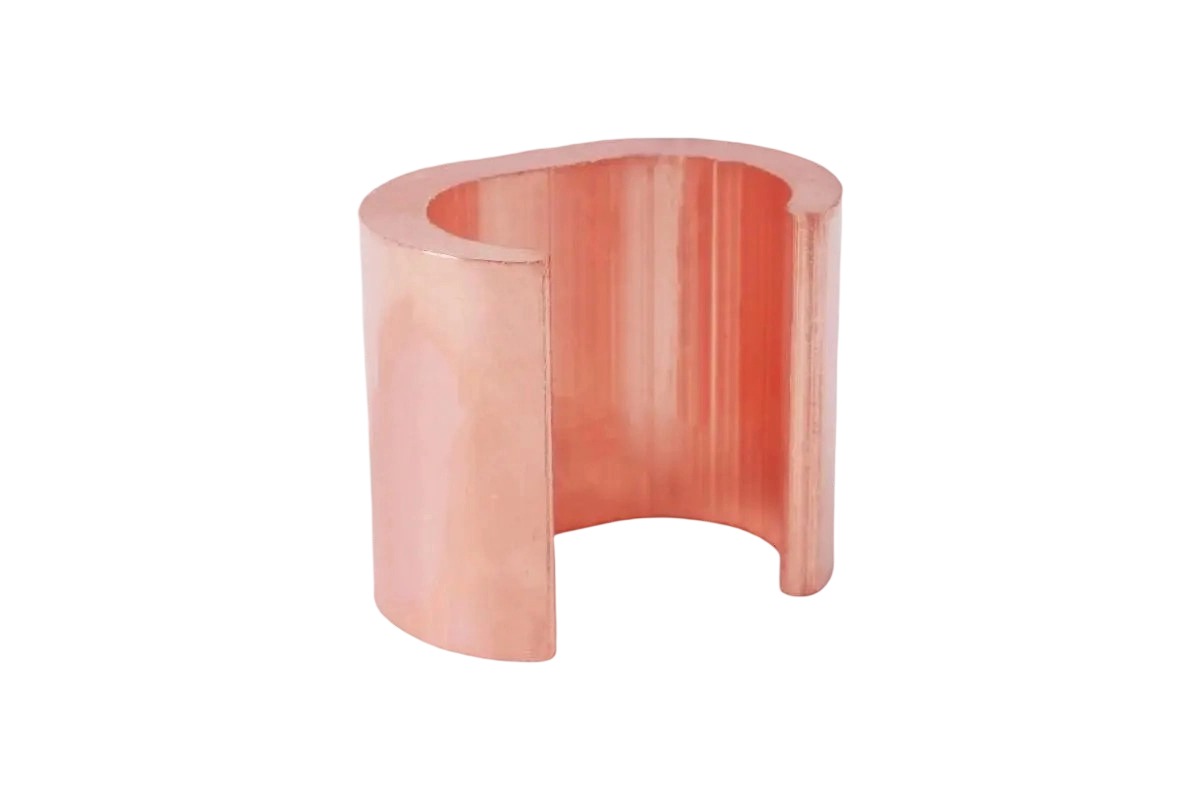
Different attachment points experience entirely different forces. You cannot use a one-size-fits-all approach when procuring hardware. Evaluate each component type based on its specific functional role.
Load-bearing tension clamps manage severe horizontal forces at the end of a line run. Mid-span suspension clamps simply manage the vertical weight of the cable. You must evaluate these two categories differently. Dead-end fittings require immense grip strength to prevent the line from dropping. Suspension units need smooth internal contours. Rough edges inside a suspension clamp will chafe and destroy the cable sheath over time.
Specific overhead line clamps must guarantee exceptional slip strength. They need to hold 90-95% of the conductor's ultimate tensile strength (UTS). They must achieve this grip without damaging the cable sheath. If a clamp slips early, the line sags dangerously close to the ground. If it crushes the cable, internal metallic strands will break. To verify slip strength, insist on the following validation steps:
Request the raw tensile testing data from the manufacturer's laboratory.
Review the specific cable diameters used during the manufacturer's testing phase.
Check the post-test condition of the cable sheath in the lab report.
Verify the clamp body shows no signs of micro-fractures after peak load application.
You must assess hardware ergonomics carefully. Designs requiring specialized proprietary tooling slow down your rollout speeds. They drastically increase your daily labor costs. Tool-free designs significantly lower implementation friction. Standard-tool compatibility ensures your line workers operate efficiently in the field. Worker fatigue drops sharply when they can use standard wrenches. Always request physical samples to test field usability before signing a bulk contract.
A glossy product catalog does not guarantee field reliability. You must drill down into the manufacturer's quality control processes. Strict validation separates top-tier suppliers from unreliable vendors.
Standardized type testing is absolutely vital. Request verifiable documentation demonstrating IEC, IEEE, or local standard compliance. Do not trust generic marketing claims. Demand the actual laboratory test reports. Independent third-party testing validates the manufacturer's engineering capabilities. When you buy aerial cable accessories in massive quantities, you need documented proof of baseline performance. Check the accreditation status of the testing laboratory provided in the reports.
A perfectly engineered prototype means very little in bulk procurement. Evaluate the manufacturer’s routine factory acceptance testing (FAT) procedures. Bulk production runs demand strict statistical quality control. Ask the manufacturer exactly how they test large volumes on the assembly line. Do they pull random samples every single hour? Do they conduct destructive testing on every production batch? You need verifiable proof of batch-to-batch consistency. Inconsistent manufacturing tolerances lead to unpredictable field failures.
Many modern components utilize advanced plastics or rubber compounds. Insulated piercing connectors and wedge clamps rely heavily on these polymers. You must verify their UV resistance capabilities. Ask for thermal aging test reports immediately. Prolonged sun exposure causes cheap plastics to degrade rapidly. They become brittle and crack under minor physical stress. This exposes live electrical wires directly to the elements. Quality polymers feature specific carbon black additives to block UV radiation.
Your procurement strategy must account for long-term project viability. The cheapest initial price tag often hides massive downstream expenses. Evaluate the supplier as a long-term operational partner.
Assess the vendor’s true production capacity. Analyze their historical on-time delivery rates closely. Supply chain delays cause massive project bottlenecks. Ask about their raw material reserves and supply chain redundancies. Can they scale up production if your project timeline accelerates? A reliable vendor maintains buffer stock for essential raw materials. Late deliveries force your installation crews to sit idle, burning through your budget rapidly.
You must clearly understand your recourse for batch defects. Analyze the manufacturer’s warranty limitations regarding bulk deployments. Some warranties only cover the physical replacement of the broken part. They entirely ignore the massive labor costs required to dispatch a truck and replace it. Negotiate broader warranty coverage that protects your project. A supplier confident in their manufacturing quality will offer robust defect replacement terms.
Calculate the true economic impact of your hardware choices. Factor in expected lifespan, maintenance requirements, and installation time. The absolute cheapest bulk quote routinely results in much higher long-term operational expenses (OPEX). Cheap hardware fails early. Truck rolls to replace broken clamps destroy your maintenance budget. High-quality parts save massive amounts of money over the entire lifecycle of the network. Invest in durability upfront to protect your future profit margins.
Buying components at scale requires balancing metallurgical science, mechanical physics, and supply chain logistics. You cannot treat these vital network elements as simple commodities. Material compatibility, load-bearing verification, and strict quality assurance dictate the ultimate success of your deployment. Shortcuts in the procurement phase always manifest as expensive field failures later.
We recommend initiating your procurement process by requesting raw material certificates immediately. Ask your shortlisted vendors for physical samples and conduct localized mechanical testing. Scrutinize their factory testing protocols before signing any bulk purchase agreement. Taking these decisive actions ensures your overhead networks remain resilient, safe, and economically viable for decades.
A: Lead times vary significantly based on component complexity. Off-the-shelf standard parts typically ship within 2 to 4 weeks. Custom tooling or specialized bimetallic connectors often require 8 to 12 weeks. Always confirm raw material availability with your supplier, as global metal shortages can unexpectedly extend these timelines.
A: We strongly advise against mixing hardware from different manufacturers on the same connection point. Mismatched mechanical tolerances can cause uneven load distribution and cable slippage. Furthermore, mixing parts often voids the manufacturer's warranty, leaving you financially responsible for any subsequent line failures.
A: Implement a strict intake inspection checklist. Perform visual checks for casting defects and smooth internal contours. Conduct galvanization thickness tests using a digital coating thickness gauge. Finally, pull random samples from different pallets and perform destructive tensile testing to ensure they meet the agreed-upon slip strength standards.
A: Premature failure usually stems from two common errors. First, galvanic corrosion occurs when copper connects directly to incompatible metals like aluminum in wet environments. Second, installation crews often over-torque the bolts. Over-torquing strips the threads and creates micro-fractures in the clamp body, leading to structural failure under wind loads.
