
Views: 0 Author: Stephen Liu Publish Time: 2026-11-14 Origin: Site


An aluminum bolted connecting pipe for MV distribution should be purchased only after the conductor application, exact product drawing, installation method, inspection plan, and traceability requirements are documented. MINGXU identifies BSMB as an aluminum alloy bolted connecting pipe for medium-voltage distribution. The verified product facts do not provide a specific voltage, conductor range, dimensions, bolt settings, or product certification.
The buyer’s main deliverable is therefore not a product photo. It is an evidence package that allows engineering to approve the item, the installer to assemble it correctly, and quality personnel to verify the completed work.
Approve the application before approving the price. Start with conductor data and the complete joint design. Then connect the offered BSMB item to a controlled drawing and installation instruction. Finally, define how delivered identity and field completion will be checked.
A practical sequence is:
Issue the conductor and application data.
Receive the exact BSMB technical documents.
Resolve all deviations and unknowns.
Review tooling, access, and crew readiness.
Approve inspection and traceability records.
Place the order against the accepted revision.
This sequence prevents commercial urgency from turning an open technical question into a field decision.
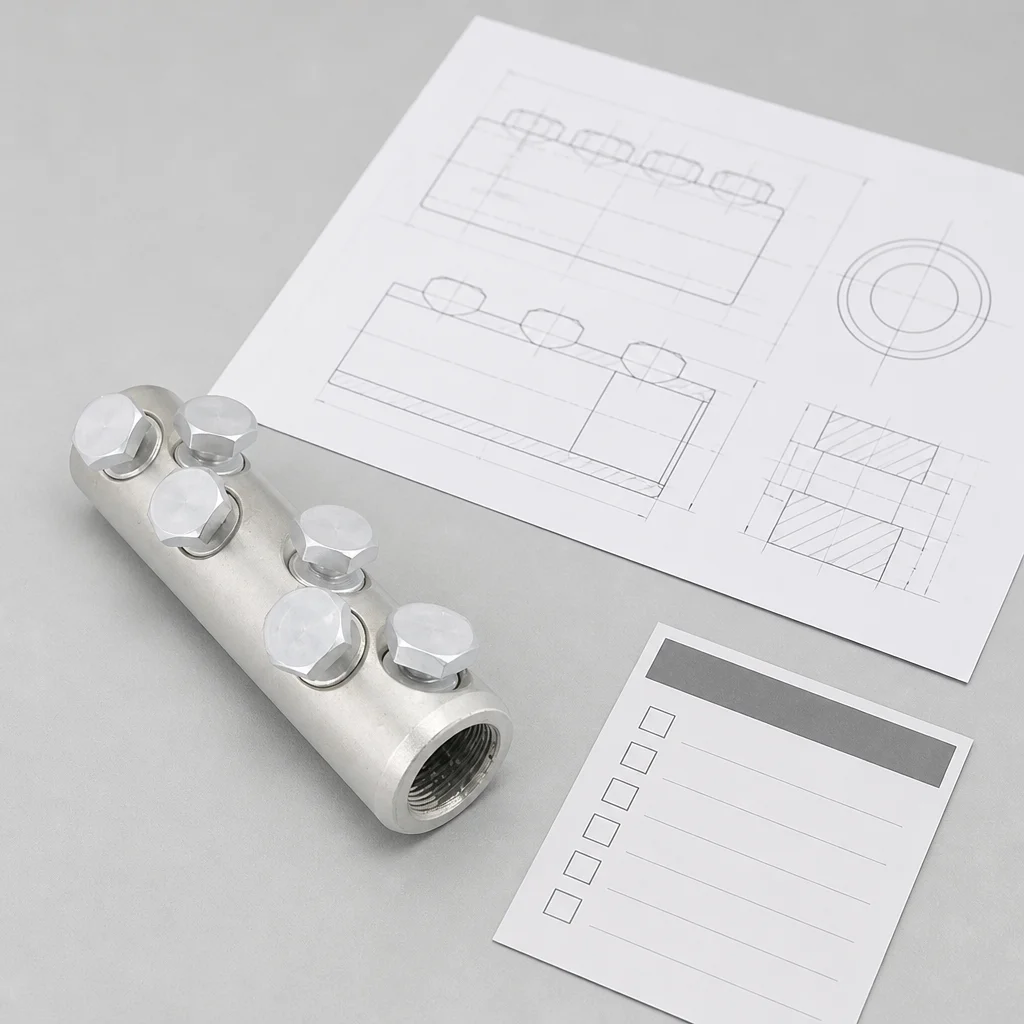
Reference-based illustration: the BSMB connector should be tied to a controlled drawing, revision and order identity before procurement decisions are closed.
Ask for the complete offered name, BSMB designation, drawing number, revision, and issue date. The drawing should show the interfaces needed for selection and installation. The quote and purchase order should reference the accepted revision.
Do not treat a family image as proof of the supplied configuration. Website content helps identify the product category, but the controlled order package must identify the exact item.
How is the specific BSMB item identified?
Which dimensions and tolerances control conductor fit?
What entry, center, or positioning geometry is shown?
How are installation elements identified and sequenced?
What is the completed connector envelope?
Which markings remain visible during incoming inspection?
Does the drawing reference the applicable installation instruction?
These are requests for evidence, not claims that every drawing uses the same design. Engineering should cite the supplier response next to each closed requirement.
State that manufacture and supply must follow the accepted drawing revision. Require notification before any change to design, material, installation instruction, marking, or packaging identity that affects the approved file.
A replacement document is not automatically acceptable because its revision number is newer. Review the change and decide whether it affects conductor fit, tooling, inspection, or the broader joint system.
The term “aluminum” is not a complete conductor specification. Send data for both conductors in the joint and ask MINGXU to identify the applicable BSMB selection in writing. Include construction and dimensions required by the supplier or project.
Circuit and joint location
Conductor material on both sides
Cable designation and nominal cross-section
Strand construction and relevant prepared dimensions
Condition of existing conductor in repair work
Required insertion arrangement
Insulation system and restoration build-up
Space, routing, and support constraints
Do not extrapolate a size range from a similar connector or from a third-party catalog. The verified MINGXU facts do not state a BSMB range.
If the project joins old and new cable sections, identify them separately. Similar nominal labels can hide differences in construction or actual dimensions. A connector approval should cover the real side-A and side-B combination.
Where a cable schedule changes after approval, resubmit the affected joint. Substitution control applies to the conductor as well as the connector.
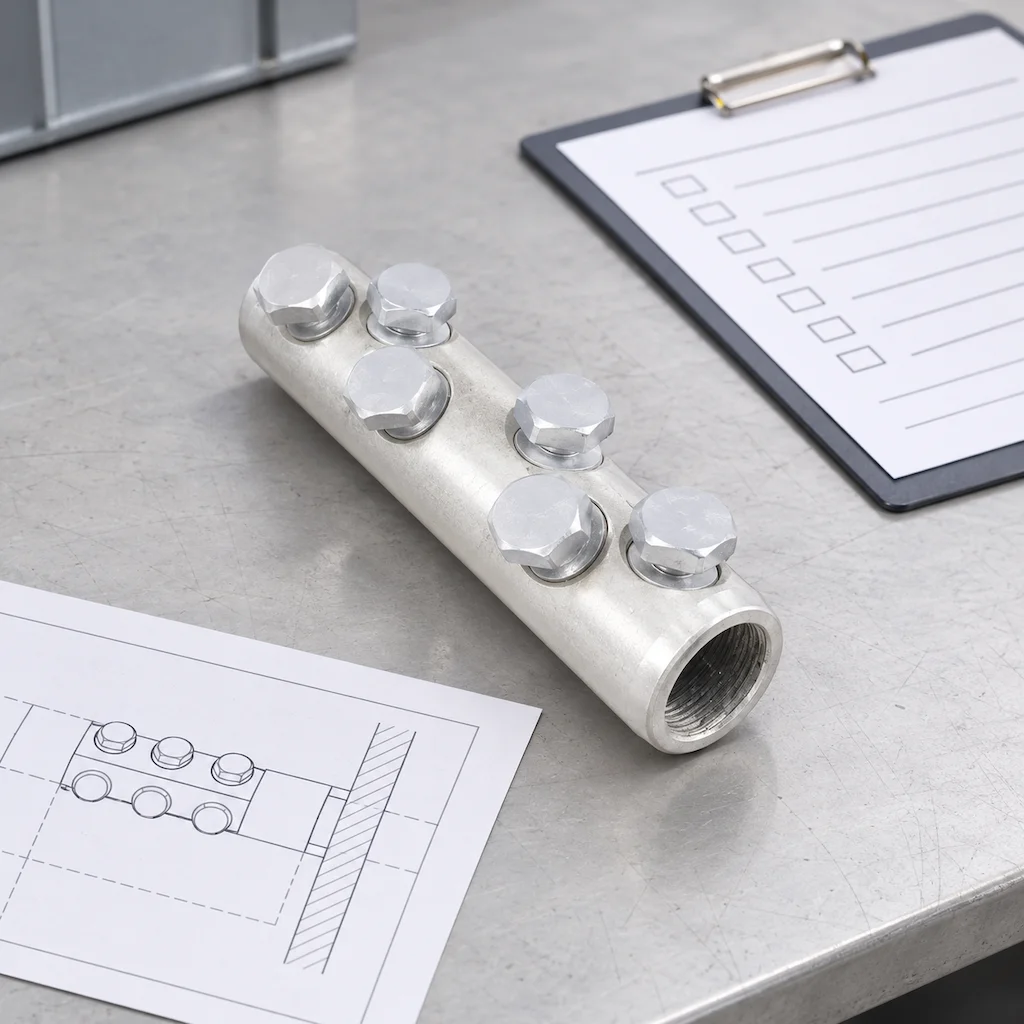
Reference-based inspection scene: tool access, conductor preparation, hold points and traceability records should be planned before field installation begins.
Bolted does not mean tool-free. The installation package should define preparation, insertion or positioning, bolt sequence, tool requirements, and completion checks. Request the instruction for the exact BSMB item and accepted drawing revision.
Do not invent a torque or assume that a familiar setting applies. The verified product information does not provide bolt settings. Only use values and methods supplied in the applicable documentation and accepted by the project.
What preparation method is specified for the conductor?
How is correct insertion or position confirmed?
What tool engages the installation elements correctly?
Is a sequence or staged operation required?
What completion feature or criterion is inspected?
What space is needed around the connector for tool access?
Which environmental controls and consumables are specified?
Use the actual instruction in crew training and the pre-job briefing. A generic bolted-connector method can create false confidence.
Model the real work area. Include tool length, straight engagement, hand clearance, nearby equipment, barriers, cable support, and insulation-restoration space. A compact connector can still be difficult to install if the tool approaches at an angle.
For congested projects, use a representative mock-up. The goal is to verify workflow and access, not to create new acceptance limits.
Bolted connectors often look easier to inspect because the installer can see the hardware. Yet the most important interfaces—conductor condition, internal position, and contact formation—may become hidden during assembly. Visible bolts can encourage inspectors to focus on what is easiest to photograph rather than what is most important to control.
The counterintuitive response is to increase in-process inspection for a visibly mechanical product. Verify conductor preparation and position before they disappear. Record the exact installation sequence and applicable completion evidence. Final appearance should close the process, not replace it.
This is why a product photograph is weak procurement evidence. It shows external form at one moment but does not define compatibility or field execution.
BSMB is identified for MV distribution, but the connecting pipe is not the entire joint. The project must coordinate the conductor connection with insulation restoration, environmental protection, electrical field-control elements where applicable to the approved joint design, cable geometry, and mechanical support.
Do not convert the MV application statement into a specific voltage rating. The verified product facts supply no value. Submit the project’s requirements and request documentation for the proposed use.
Connector envelope fits within the approved joint system
Cable preparation lengths are coordinated across components
Installation sequence keeps surfaces controlled
Outer restoration can be completed in available space
Joint support prevents unintended connector loading
Inspection points occur before critical interfaces are hidden
Handover records identify all relevant components
Assign one engineer or design authority to own the complete interface. Separate suppliers do not remove the buyer’s need to ensure the components form an approved system.
Create an inspection and test plan before purchase so the required evidence can be requested with the product. Avoid criteria that have no documented source.
Verify product designation, drawing revision, quantity, packaging, labels, and condition. Retain batch or package identity according to project requirements. Segregate damaged, mixed, or unclear items.
Review supplied documents against the approved submittal. A drawing in the box is useful only if it matches the accepted revision.
Cable and conductor identity confirmed
Prepared conductor condition accepted
BSMB identity matched to the joint schedule
Correct position established before concealment
Tools and instruction revision verified
Installation sequence witnessed or recorded
Completed condition checked against documented criteria
Joint restoration and supports accepted
State who witnesses each point and what record closes it. Photographs should show identification and context where possible.
Define what happens if conductor dimensions differ, the connector marking is unclear, a tool cannot access the bolt correctly, or an installation step is interrupted. The crew should have an escalation route and authority to stop.
Do not repair, rework, or reuse a connector unless an approved instruction explicitly permits the action. Document disposition and replacement identity.
Traceability should connect the commercial order to the field location. Request packaging and documentation that support the project’s record structure.
A joint record can include:
Purchase order and approved technical submittal
BSMB item and drawing revision
Package or batch identification
Circuit, phase, and joint location
Conductor identities on both sides
Installation instruction revision
Tool identification and project-required status
Installer, inspector, and date
Hold-point and restoration evidence
Deviations and approved dispositions
This information is more useful than an unindexed photo archive. It lets future teams understand what was installed and why.
A score can help compare vendors or offers, but unresolved mandatory requirements should not be averaged away. Use pass, fail, or pending for technical gates. Apply commercial scoring only to technically acceptable bids.
Product identity tied to a drawing
Compatibility tied to conductor data
Installation instruction and tooling defined
Complete joint interfaces reviewed
Inspection criteria documented
Traceability and change control accepted
Lead time and delivery resilience
Documentation response time
Packaging and identification quality
Trial or sample support
Spare strategy
Total field cost, not only unit price
Total field cost can include training, special tools, outage exposure, mock-ups, inspection effort, and possible rework. A low unit price may be expensive if technical clarification arrives late.
BSMB is described for MV distribution, but no specific voltage is verified. State the project requirement and request supporting product documentation. Do not publish or purchase against a guessed value.
Company management-system statements do not prove that a particular BSMB item holds a product certification. Keep company-level credentials separate from product-level evidence and project approval.
Bolt appearance does not establish a setting. Use only the applicable BSMB instruction and accepted project method.
A photograph cannot establish internal geometry, conductor range, tolerances, sequence, or acceptance criteria. Require drawings and instructions.
If the inspection plan is created after installation begins, critical interfaces may already be hidden. Define hold points during procurement.
Send one consolidated technical questionnaire:
Which exact BSMB item matches the attached conductor schedule?
What drawing and installation-instruction revisions apply?
What preparation, positioning, tool, and sequence are required?
Which completion and inspection criteria are documented?
How is product and batch identity maintained?
What changes require buyer notification?
What information is needed for a custom proposal?
MINGXU describes itself as an OEM/ODM manufacturer. Use that capability through controlled technical communication. A custom option should receive a distinct drawing, review, and purchase identity.
MINGXU identifies BSMB as an aluminum alloy bolted connecting pipe for medium-voltage distribution. Exact conductor compatibility and installation requirements must be confirmed from current supplier documentation.
The verified BSMB information does not state a specific voltage. Do not infer one from the MV description. Provide the project requirement and request the relevant evidence for engineering review.
No torque value is established in the verified product facts. Follow the exact current BSMB installation instruction accepted for the project; never copy a setting from a similar product.
No product-specific certification is established by the available verified facts. Ask for the documents required by your project and evaluate them without turning company-level statements into product certification.
Do not assume universal compatibility. Submit material, construction, nominal size, relevant dimensions, and side-A/side-B details for written product selection and drawing review.
An aluminum bolted connecting pipe becomes project-ready when its identity, conductor match, installation process, joint interfaces, inspection, and traceability are closed together. Send MINGXU a structured BSMB inquiry with your conductor schedule and MV distribution application. Request the current drawing and instruction, resolve every pending gate, and place the order against the accepted technical file.
