
Views: 0 Author: Site Editor Publish Time: 2026-11-05 Origin: Site


Connecting copper and aluminum conductors introduces inevitable mechanical and chemical risks. Standard terminals often degrade under these aggressive conditions, leading to critical electrical system failures. You face a constant battle against physical forces in any electrical installation. For facility managers and electrical engineers, operational reliability hinges on mitigating galvanic corrosion. You must also manage thermal expansion mismatch effectively to prevent catastrophic fires. Standard solutions frequently fall short in these demanding industrial environments. A properly engineered Bimetal Terminal bridges this dangerous material gap flawlessly. It ensures long-term connection integrity while maintaining strict compliance with complex safety regulations. By implementing these advanced components, you eliminate hidden failure points in your network. Read on to discover why mixed-metal connections fail and how advanced friction welding prevents it. We will explore key selection criteria, mandatory safety regulations, and proper installation techniques. You will learn to evaluate long-term lifecycle value and secure your electrical infrastructure for decades without relying on reactive maintenance schedules.
Failure Prevention: Bimetal terminals neutralize galvanic corrosion between copper and aluminum conductors through advanced friction welding.
Thermal Stability: They maintain consistent clamping force despite the differing thermal expansion rates of mixed metals.
Cost Efficiency: While initial unit costs are higher, the elimination of maintenance downtime and catastrophic failure yields a positive lifecycle ROI.
Compliance: Selecting terminals that pass rigorous pull-out and thermal cycling tests is mandatory for industrial safety regulations.
Engineers often combine aluminum cables and copper busbars to optimize electrical grid construction. This combination creates an immediate and severe electrochemical conflict. Aluminum and copper sit far apart on the galvanic scale. When they meet in the presence of moisture, a destructive electrochemical reaction begins automatically. The aluminum acts as an anode and sacrifices itself to the copper cathode. This process accelerates rapid oxidation at the critical joint interface. Oxidation layers form a highly resistive barrier between the conductive metals. Increased electrical resistance generates excessive heat during normal load conditions.
Temperature fluctuations introduce another severe mechanical threat to the system. Aluminum expands and contracts at a significantly higher rate than copper. When electrical loads cycle on and off, the joint undergoes continuous thermal movement. Standard monometal connectors cannot accommodate this differing expansion coefficient effectively. They gradually lose their grip on the underlying conductors. This creeping loosening effect causes internal clamping structure failure over time. Poor contact area reduces current transfer efficiency dramatically across the connection. Dangerous localized heating develops rapidly at these loose junctions. Thermal runaway can melt protective insulation and ignite surrounding panel materials.
These predictable failures represent far more than minor technical glitches. They drive massive unplanned downtime across manufacturing and industrial facilities. Asset damage escalates rapidly when overheated connections destroy connected breakers or transformers. Severe safety hazards threaten personnel working near degrading control panels. Maintenance teams spend countless hours chasing intermittent voltage drops across the network. You cannot solve these inherent material conflicts by simply tightening bolts harder. Standard connectors remain fundamentally flawed for mixed-metal applications. They force you into a reactive cycle of endless repairs and sudden outages.
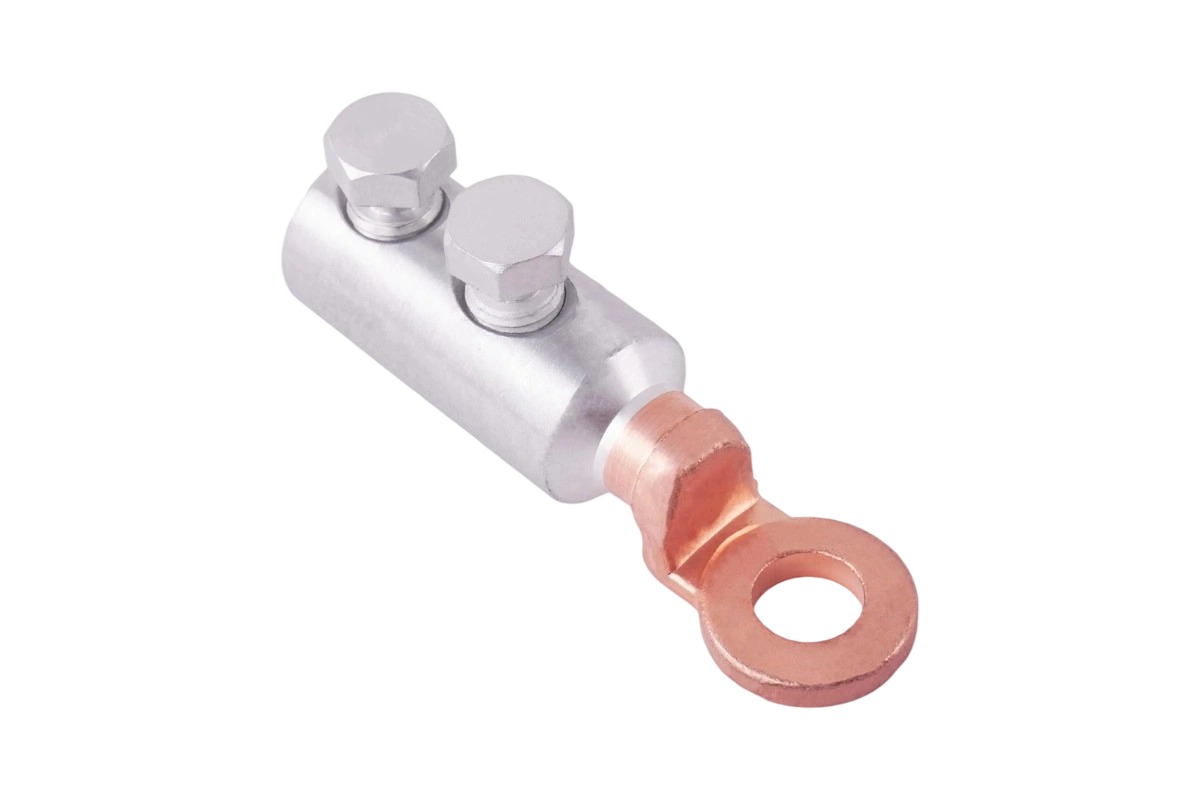
A properly engineered Bimetal Terminal actively solves both electrochemical and mechanical vulnerabilities simultaneously. Manufacturers achieve this through advanced friction welding technology. This specialized manufacturing process spins the aluminum and copper components together at high speeds. The resulting friction generates intense localized heat without external flame. It fuses the two distinct metals at a profound molecular level. This solid-state weld eliminates the physical gap where moisture typically enters. Moisture ingress becomes physically impossible at the completed joint. The fused transition zone presents a completely unified conductive path. You eliminate the root cause of galvanic corrosion entirely.
Material allocation plays a crucial role in the anatomical design. Every component serves a highly specific material purpose for the circuit. The terminal features an aluminum barrel designed exclusively for the aluminum cable. It features a solid copper palm built explicitly for the copper busbar. Metals only ever interface directly with their exact chemical counterparts. The aluminum cable touches only the aluminum barrel during installation. The copper busbar contacts only the copper palm at the breaker. This intelligent separation isolates the mixed-metal transition safely within the factory-welded joint.
Environmental degradation requires aggressive proactive measures to prevent premature failure. Oxidation prevention ensures the connection remains stable over several decades. High-quality terminals arrive with pre-filled jointing compounds inside the barrel. These specialized compounds break down existing oxide layers during the crimping process. They also seal the newly exposed metal from atmospheric oxygen instantly. Secure sealing prevents environmental moisture from entering the sensitive crimp zone. Some advanced designs incorporate protective caps or heat-shrink tubing for added defense. This comprehensive approach shields the interface from corrosive industrial atmospheres perfectly. You secure a reliable pathway for electrical current without continuous maintenance.
Selecting the correct components requires strict adherence to global industry safety regulations. Electrical codes mandate specific performance criteria for all bimetallic connections. You must verify compliance with recognized standards like IEC or UL guidelines. These organizations dictate rigorous testing protocols for mechanical and electrical stability. A certified terminal guarantees safe operation under extreme fault conditions. Regional safety regulations often impose additional requirements for specific environmental hazard ratings. You should never install uncertified components in critical power infrastructure. Doing so voids equipment warranties and exposes facilities to massive liability risks.
Standard designs handle typical indoor panel applications quite effectively. However, specialized configurations exist for highly demanding operational environments. DTLC bimetallic cable lugs feature optimized geometries for heavy-industrial applications. They provide enhanced protection in high-corrosion or high-vibration settings. Coastal facilities or chemical processing plants require these upgraded specifications. The solid-state weld area is often larger to distribute mechanical stress better. You must align the specific terminal design carefully with your exact environmental challenges.
Buyers must request comprehensive testing documentation from manufacturers before procurement. Visual inspection alone cannot confirm the internal integrity of a friction weld. You need empirical data to validate long-term reliability claims. Reliable vendors supply detailed technical reports proving product endurance under stress.
Review the following essential testing parameters when evaluating vendors:
Thermal Shock Resistance: Verifies stability during rapid extreme temperature changes across the joint.
Electrical Conductivity Longevity: Ensures contact resistance remains low over thousands of operational load cycles.
Mechanical Tensile Strength: Confirms the weld can withstand severe pulling forces without fracturing.
Short-Circuit Capacity: Proves the terminal survives massive instantaneous fault currents safely without exploding.
Manufacturer Evaluation Criteria
Testing Dimension | Standard Requirement | Impact on Reliability |
|---|---|---|
Pull-Out Strength | Meets IEC 61238-1 mechanical limits | Prevents cable slipping during heavy vibration |
Thermal Cycling | 1000+ cycles without resistance spike | Guarantees safety under fluctuating power loads |
Corrosion Resistance | Salt spray test endurance (>480 hours) | Ensures longevity in harsh outdoor environments |
Weld Penetration | 100% molecular fusion verified via X-ray | Eliminates microscopic gaps for moisture entry |
Even the highest quality components fail inevitably if installed incorrectly. Installation precision dictates the ultimate success of the entire connection. You must use appropriate crimping tools designed specifically for bimetallic applications. Incorrect dies crush the terminal barrel and destroy its structural integrity completely. Hexagonal crimping profiles generally provide the most uniform compression around the cable. Exact torque specifications remain equally critical during the final bolting phase. Over-torquing distorts the copper palm and creates uneven contact surfaces. Under-torquing allows micro-movements that eventually lead to catastrophic electrical arcing.
Follow these critical installation steps for optimal results:
Select the precise crimping die matching the exact terminal barrel diameter.
Strip the aluminum cable insulation carefully without nicking the underlying conductive strands.
Apply specific torque values recommended by the manufacturer using a calibrated wrench.
Wipe away excess jointing compound pushed out during the compression process.
Surface preparation demands meticulous attention from all field technicians. Aluminum forms a tough oxide layer instantly upon exposure to ambient air. This microscopic layer acts as a powerful electrical insulator against current flow. You must remove this aluminum oxide mechanically using a dedicated wire brush. Immediately apply high-quality anti-oxidant pastes to the freshly brushed cable strands. Insert the coated cable into the barrel without any delay. This rapid sequence prevents the oxide layer from reforming before compression occurs. Many pre-filled terminals simplify this by integrating the compound directly inside.
You must establish rigorous inspection and testing protocols post-installation. Baseline testing verifies connection integrity before energizing the electrical system fully. Micro-ohmmeter testing measures the exact contact resistance across the new joint. The resistance values must align strictly with baseline manufacturer specifications. Thermographic inspections provide vital operational data once the system reaches peak electrical load. Infrared cameras detect abnormal temperature rises instantly from a safe distance. A healthy joint operates cooler than the primary conductor itself. You should document these initial readings to benchmark future maintenance inspections accurately.
Procurement teams often hesitate when reviewing advanced component pricing. We must acknowledge transparently that specialized components carry a higher initial procurement cost. They are noticeably more expensive than standard monometal lugs. The complex friction welding process requires highly expensive manufacturing equipment. Specialized quality control measures also add considerably to the base unit price. Buyers focusing solely on upfront expenditure might default to cheaper market alternatives. This narrow financial perspective introduces massive hidden liabilities into the infrastructure. Standard connectors guarantee future maintenance expenditures when handling mixed metals.
We must shift the evaluation entirely to lifecycle value and longevity. Compare the upfront premium directly against the recurring costs of routine maintenance. Standard joints demand periodic re-torquing and constant application of anti-corrosion chemical sprays. Labor hours accumulate rapidly over a multi-year operational period. Furthermore, monometal terminals eventually succumb to galvanic degradation anyway despite ongoing maintenance. Terminal replacement forces unexpected facility shutdowns and lost operational time. You suffer severe financial penalties during these unplanned system outages. Lost production time eclipses the initial cost savings of cheap connectors instantly. A quality bimetallic component eliminates these ongoing maintenance burdens entirely.
Frame this initial investment as an aggressive risk mitigation strategy. It functions as a powerful insurance policy against catastrophic electrical failures. Failed standard connections frequently ignite dangerous localized panel fires. The resulting asset damage destroys expensive switchgear and surrounding electrical infrastructure. Replacing a burnt transformer costs infinitely more than upgrading a single terminal block. You also protect your workforce from deadly arc flash incidents effectively. Investing in superior connection technology secures your entire electrical ecosystem comprehensively. The positive return on investment becomes undeniable over a long-term operational horizon.
Addressing mixed-metal electrical transitions demands zero compromises on component quality. The bimetal terminal stands as a foundational requirement for system longevity, not merely an optional upgrade. Relying on standard connectors guarantees rapid galvanic degradation and eventual thermal failure. Properly fused components neutralize these inherent risks permanently across your network.
Procurement and engineering teams must refine their shortlisting logic immediately. You should prioritize vendors who provide highly transparent testing data. Demand verifiable proof of precise friction-welding processes from your suppliers. Insist on clear compliance certifications like IEC or UL before finalizing any purchase order.
Take action by auditing your current electrical infrastructure today. Identify all existing copper-aluminum junctions across your facility panels. Look closely for early signs of white oxidation or severe heat discoloration. Consult with technical sales specialists regarding application-specific sizing and selection guidelines. Upgrading your vulnerable connection points now prevents catastrophic operational failures tomorrow.
A: Failures are rarely due to the bimetal bond itself. They typically stem from improper installation, such as using incorrect crimping dies or over/under-torquing the bolts. Selecting a terminal with an inadequate internal clamping structure for the specific cable gauge also causes severe contact issues.
A: Field testing should include a visual inspection for mechanical deformation. You must use micro-ohmmeter testing to ensure low contact resistance across the joint. Finally, perform infrared thermography during peak loads to detect abnormal temperature rises indicating poor current flow.
A: DTLC types are specifically engineered with optimized copper-to-aluminum transition zones. They are highly effective in environments extremely susceptible to moisture and galvanic corrosion. This specialized design makes them a preferred choice for exposed outdoor installations or heavy-industrial applications.
A: While standard terminals may cost up to 40% less initially, their 10-year lifecycle expenses are significantly higher. You must account for required periodic re-torquing, application of anti-corrosion sprays, and eventual replacement driven by inevitable galvanic degradation.
