
Views: 226 Author: Stephen Liu Publish Time: 2026-09-09 Origin: Site


For reliable LV overhead anchor clamp selection, first match the number of cores and the mechanical duty. MINGXU’s PAC-25 is identified for anchoring a four-core low-voltage overhead service line. PA25 is identified for two-core low-voltage overhead tension fixation. PAD-25 is identified as a four-core insulating tension clamp.
These are three distinct application descriptions, not interchangeable labels. Select only after confirming the actual cable assembly, support point, load direction, termination or tension function, hardware interface, and required project evidence. The supplied product facts do not establish dimensions, tensile capacities, material composition, temperature limits, or certifications, so those details must come from approved project drawings and current manufacturer documents.
A disciplined comparison uses three questions in order:
Is the cable assembly two-core or four-core?
Is the point intended to anchor a service line or provide tension fixation?
Does the project specifically require an insulating tension-clamp arrangement?
On the verified descriptions alone, the map is straightforward:
PAC-25: four-core LV overhead service line anchoring.
PA25: two-core LV overhead tension fixation.
PAD-25: four-core insulating tension clamp.
This map prevents the most basic mismatch. It does not complete engineering approval. Core arrangement, cable construction, supported load case, attachment hardware, installation method, and the project’s acceptance criteria still require confirmation.
PAC-25, PA25, and PAD-25 share letters and numbers, which can invite selection by memory. A buyer may treat the suffix as a size or assume that one model is a minor variation of another. The supplied facts do not support either assumption.
The safer method is to write the function in plain language before writing the model. For example: “four-core LV overhead service line anchoring; offered model PAC-25, subject to drawing confirmation.” This wording keeps the engineering requirement ahead of the catalogue code.
A model code can help identify a product family. It does not prove cable fit, rated mechanical performance, material, or compliance. Those claims require specific documentation for the offered item.
This distinction matters during substitution. A product with a similar name cannot be accepted merely because its code looks close. The substitute must close every interface and evidence requirement.
PAC-25,PA25, and PAD-25 share letters and numbers ,which can invite selection by memory.A buyer may treat the suffix as a size or assume that one model is a minor variation of another.The supplied facts do not support either assumption.
A two-core and a four-core assembly present different geometry to a clamp. The number and arrangement of insulated conductors influence how the bundle is held and how force is transferred.
Therefore, a clamp named for two-core tension fixation should not be proposed for a four-core task without explicit engineering and manufacturer confirmation. The same principle applies in reverse.
MINGXU identifies PAC-25 as a four-core anchor clamp for an LV overhead service line. Its verified role combines three boundaries: four cores, low voltage, and service-line anchoring.
The description establishes the intended general function. It allows the project team to shortlist PAC-25 when the design point is a four-core LV overhead service-line anchor.
It does not provide a confirmed cable dimension range, tensile rating, span limit, support hardware, material, installation torque, or environmental rating. Do not supply those details from memory or from another manufacturer’s product.
Ask for the current product drawing and selection information for the exact cable. Confirm:
Cable construction and four-core arrangement.
Verified overall geometry at the clamping location.
Intended anchor point and load direction.
Compatible attachment and support hardware.
Installation sequence and required tools.
Inspection and acceptance guidance.
Batch and item identification required by the project.
The project structural or line design should define the applicable mechanical loads. The manufacturer should confirm that the offered item is suitable for those stated conditions. Neither side should infer the answer from the product name.
MINGXU identifies PA25 as a two-core clamp for low-voltage overhead cable tension fixation. The two-core boundary is essential and should appear in the purchase description, drawing note, receiving checklist, and installer briefing.
“Tension fixation” tells the designer to examine how line force enters the clamp and leaves through the support connection. It is not enough to confirm that the clamp can physically close around the cable.
Trace the path from the tensioned cable, through the clamp body and connecting hardware, to the supporting structure. Every interface in that path needs a defined role and approved compatibility.
The facts supplied for PA25 do not include a tensile capacity, cable size range, span length, material, or test standard. Those values must not be invented. Put the project load case into the inquiry and require a documented manufacturer response.
If the response is incomplete, keep the item pending rather than approving it based on resemblance to a previously used clamp.
MINGXU identifies PAD-25 as a four-core insulating tension clamp. This makes it relevant when the project requirement is explicitly a four-core insulating tension-clamp function.
The product title supports the word “insulating,” but it does not establish a material grade, dielectric test value, insulation thickness, voltage withstand figure, or certification. Do not extend the description beyond what is verified.
The project should define what the insulating function must accomplish in the complete assembly and request applicable evidence for the exact item. The cable, clamp, attachment hardware, and support arrangement should be reviewed as one system.
As with PA25, draw the mechanical path. Check how the four-core assembly enters the clamp, how load transfer occurs, whether cable routing is aligned, and how the clamp connects to the support.
A component can be correctly named yet incorrectly installed if the support direction, cable path, or adjacent hardware imposes a condition outside the approved arrangement.
The most useful selection discipline is to write a one-sentence mechanical requirement without any model code. For example:
Anchor the identified four-core LV overhead service-line assembly at the shown support point and transfer the project-defined load through the approved attachment hardware.
Only after that sentence is agreed should the team map a product to it. Under MINGXU’s verified descriptions, PAC-25 maps to that example. A different sentence—two-core LV tension fixation—maps to PA25. A four-core insulating tension-clamp requirement maps to PAD-25.
This method is stronger than catalogue-first selection for three reasons. First, it makes the function reviewable by designers. Second, it exposes missing load and interface data. Third, it makes substitutions auditable because any proposed alternative must satisfy the same sentence.
The core count and model are therefore downstream outputs of the mechanical definition, not the starting assumptions.
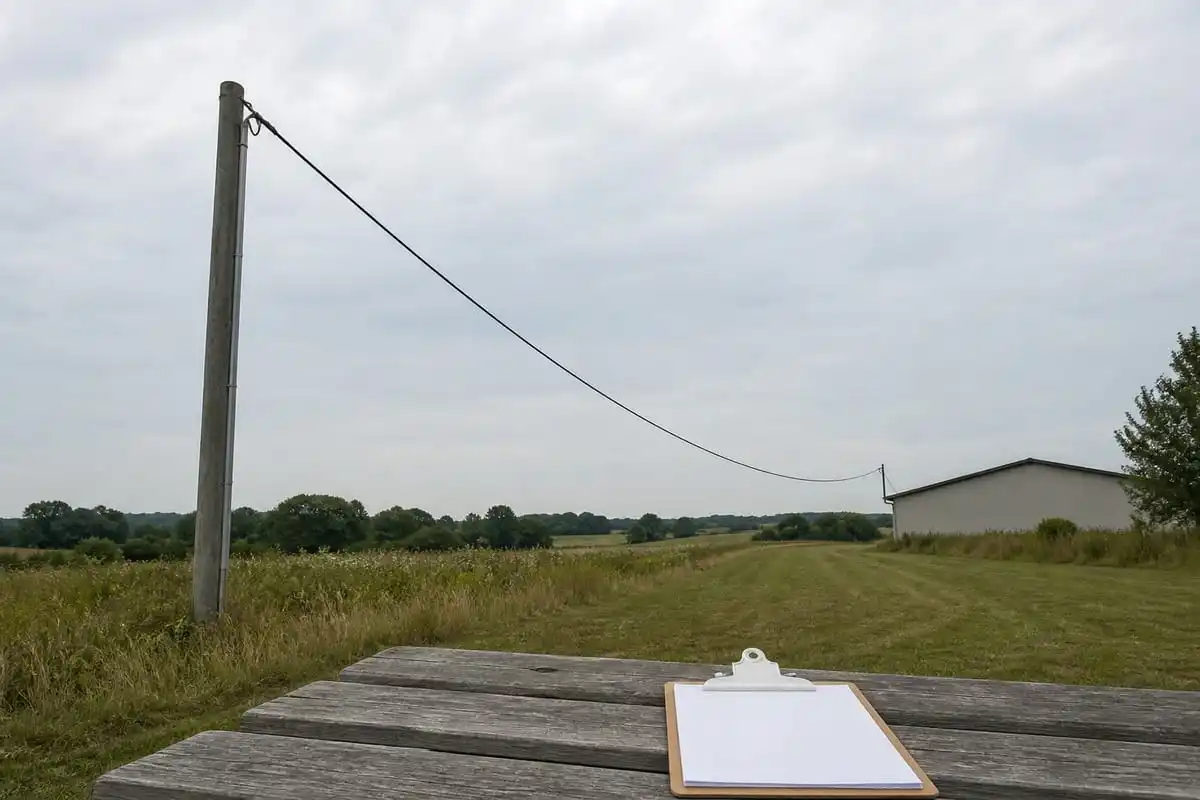
Illustrative site-survey scene only, not an approved installation layout. Record the actual support geometry, cable route and project load direction before selecting the clamp.
A simplified load-path drawing should accompany the clamp schedule. It can show:
Cable route before and after the support.
Clamp position and orientation.
Direction of line tension.
Attachment hardware and support point.
Nearby obstacles and clearance constraints.
Permanent cable support or transition points.
Joint, branch, or service-entry relationships where relevant.
The drawing does not need to invent clamp dimensions. It should communicate the application so the manufacturer can confirm the offered model and provide the appropriate detailed information.
A clamp should not be used to force a cable around an unplanned offset. Misalignment can create local stress, unwanted bending, or contact with neighboring hardware.
Survey the real support geometry, especially in retrofit work. As-built structures may differ from design assumptions.
The selected clamp works within a larger support system. Review the position of neighboring supports, transitions, and terminations so that force is not unintentionally transferred into another accessory.
This system view is also the foundation for later inspection: changes near the clamp can indicate movement elsewhere in the load path.
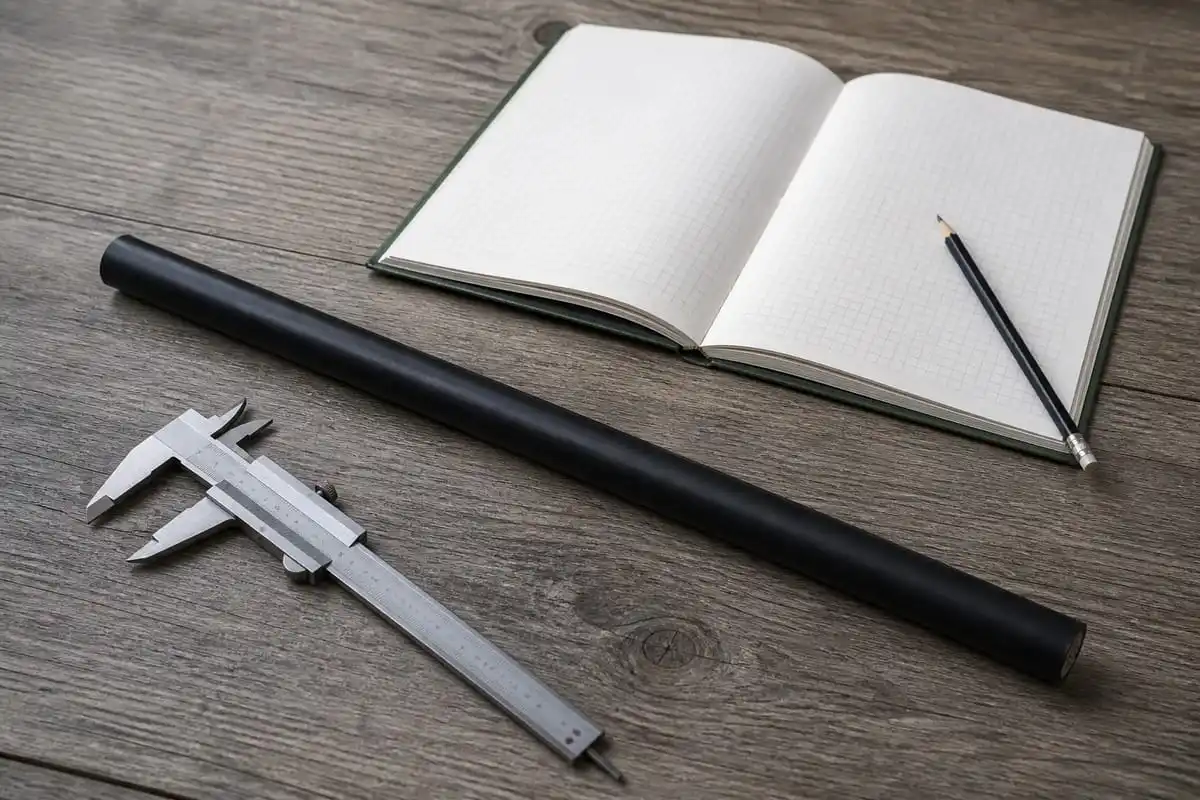
Illustrative cable-data planning scene, not a model-specific cable or clamp specification. Confirm core arrangement and manufacturer-defined measurement points for the actual cable.
A clamp inquiry should state more than “ABC cable” or “overhead cable.” Provide the project-approved cable designation, conductor/core arrangement, insulation and bundle description relevant to the clamp, and verified geometry.
If cable dimensions are required, measure and report them according to the manufacturer’s defined selection points. Do not assume a nominal conductor designation fully determines the external bundle shape.
Also report whether the cable is new or existing. Existing cable may show deformation, surface damage, contamination, or previous clamp marks. The responsible engineer and manufacturer should determine whether that condition is acceptable and how it affects selection.
Identify the complete support interface without assuming compatibility. Obtain drawings, check orientation and retention, and compare current product information with the approved support design. Do not invent hardware dimensions or materials.
Survey the real installation space, including elevated access, hand position, cable handling, and inspection views. Plan temporary support so the clamp is not used to lift or reposition an uncontrolled cable.
Include the following in the RFQ or submittal request:
Plain-language mechanical function.
System voltage and overhead service context.
Cable identity, core count, construction, and verified geometry.
Project load cases and directions, provided by the designer.
Support hardware and attachment drawing.
Installation location, access method, and environmental context.
Exact offered model and controlled product drawing.
Manufacturer selection confirmation.
Installation instructions and tool requirements.
Inspection, storage, packaging, and batch-identification information.
Required project tests or evidence.
A schedule of assumptions, exceptions, and deviations.
For PAC-25, explicitly state four-core LV overhead service-line anchoring. For PA25, state two-core LV overhead tension fixation. For PAD-25, state four-core insulating tension-clamp function.
The supplied information verifies the model names, stated core counts, and functions described above. It does not verify product materials, dimensions, tensile loads, installation temperatures, IP ratings, or product certifications.
Do not make unverified product-level certification claims for PAC-25, PA25, or PAD-25. Company-level statements cannot be applied to a specific clamp. If the project requires documented conformity, request evidence for the exact item and have it reviewed.
Avoid broad claims such as “weatherproof,” “corrosion-proof,” “maintenance-free,” or “fits all ABC cables” unless exact, applicable product documentation supports them. Accurate boundaries build more trust than unsupported superlatives.
Verify the model against the purchase order and drawing. Check package condition, quantity, item identity, batch information where provided, and the revision of supplied instructions.
Segregate PAC-25, PA25, and PAD-25 clearly. Similar naming makes mixed storage a preventable error.
Confirm cable identity and core count at the actual location. Review clamp orientation, support hardware, load direction, tools, access, and temporary support. Compare the item with the approved drawing.
If the cable or support differs from the approved information, stop and obtain a documented decision.
Follow current manufacturer instructions. Observe that the cable follows the intended path, the clamp engages as designed, attachment hardware is correctly seated, and no unintended twist or bend is introduced.
Use only installation values and methods stated in approved documentation. Do not borrow torque, spacing, or load values from a visually similar product.
Record location, circuit, cable, model, batch identity where available, installer, date, drawing revision, and inspection result. Photographs should show orientation and the adjacent load path when site rules permit.
A useful handover record supports later inspection by establishing the baseline condition.
Do not order by a shared “-25” suffix, accept physical fit as proof of load transfer, ignore support-side geometry, move a four-core model into a two-core task, or copy missing data from another catalogue. Core count, function, interfaces, and exact product evidence must align.
MINGXU identifies PAC-25 for anchoring a four-core low-voltage overhead service line. Final suitability depends on the actual cable, load case, support interface, drawings, and manufacturer confirmation.
PA25 is identified for two-core low-voltage overhead cable tension fixation. No specific tensile rating, dimension range, or material should be assumed from this description.
PAD-25 is identified as a four-core insulating tension clamp. The available facts do not establish detailed insulating performance, material, load rating, or product certification.
No. Their verified descriptions state different functions: PAC-25 is for service-line anchoring, while PAD-25 is an insulating tension clamp. Interchangeability requires project and manufacturer approval based on complete application data.
At minimum, use the project cable and load data, support-interface drawing, exact product drawing, manufacturer selection confirmation, installation instructions, inspection criteria, and a record of assumptions or deviations.
PAC-25, PA25, and PAD-25 become easier to distinguish when the team first writes the mechanical requirement in plain language. Four-core service-line anchoring points toward PAC-25; two-core LV tension fixation points toward PA25; and a four-core insulating tension-clamp task points toward PAD-25.
For a project-specific review, share the cable designation and core arrangement, verified geometry, load-path drawing, support hardware, access conditions, and required evidence with MINGXU. Final selection and installation must be confirmed against the project drawings and current manufacturer instructions.
