
Views: 0 Author: Site Editor Publish Time: 2026-08-18 Origin: Site


Connection points serve a highly critical role in low-voltage overhead distribution networks. Historically, these tiny junctions represent the most frequent point of overall system failure. Traditional cable stripping methods often exposed bare conductors to harsh environmental degradation. Fortunately, grid operators now transition from manual stripping to utilizing advanced piercing technologies for Aerial Bundle Cables (ABC). This transition fundamentally enhances network durability.
This comprehensive guide delivers a solid, evidence-based framework. Procurement teams and electrical engineers will learn how to effectively specify and evaluate these vital network components. We outline specific criteria to guarantee standard compliance, network longevity, and maximum installation safety. You will discover exactly how to prevent catastrophic failures caused by moisture ingress or galvanic corrosion. By following these precise guidelines, you can build a highly resilient overhead distribution system.
Component failure in overhead lines is disproportionately linked to substandard connector selection; verifiable type-testing is non-negotiable.
Correct sizing, bi-metallic compatibility, and precise torque control (via shear-head mechanisms) are the three pillars of mechanical and electrical integrity.
Adherence to international standards (e.g., EN 50483, NFC 33-020) mitigates liability and guarantees environmental resilience.
Grid operators face constant battles against unplanned outages. Power losses stem largely from moisture ingress. Galvanic corrosion degrades metallic joints over time. Thermal cycling frequently loosens traditional connections. These three factors destroy network reliability. Poorly designed junctions allow water to creep inside the cable jacket. This capillary action ruins entire spans of expensive aerial wiring. Engineers must address these fundamental vulnerabilities head-on.
Modern insulation piercing clamps directly mitigate these specific risks. They maintain the watertight seal of the cable jacket. Integrated metallic teeth pierce the outer insulation layers. They establish a secure electrical connection internally. The external polymer housing remains sealed. Installers do not strip any insulation away. This mechanism preserves the original mechanical strength of the bundle.
You can clearly quantify the operational return on investment. High-grade units enable safe live-line installation capabilities. Crews handle maintenance tasks without shutting down community power grids. This capability drastically reduces overall network downtime. Labor hours plummet because technicians work faster. They require minimal specialized stripping tools. Teams simply position the device and tighten a single bolt. The resulting operational efficiency transforms routine grid maintenance. Superior components ultimately drive immense value through pure reliability.
Engineers must apply strict evaluation criteria during procurement. You cannot select components based on visual similarity alone. Real-world performance relies on hidden engineering tolerances. We divide these critical requirements into three distinct categories.
You must verify the exact main and branch conductor cross-section ranges. Manufacturers specify these ranges in square millimeters (mm²). Exceeding these limits damages the conductor core. Falling below them causes loose, dangerous connections. Bi-metallic compatibility is another absolute requirement. Connecting aluminum to copper requires specialized plating. Quality units feature tin-plated copper alloy teeth. This barrier prevents destructive galvanic corrosion. Finally, the current carrying capacity must match the branch conductor. It should ideally exceed it. This prevents bottleneck heating during peak load events.
Aerial components endure relentless environmental attacks. You must demand UV-resistant polymer housings. Standard plastics become brittle and shatter under direct sunlight. Premium bodies utilize reinforced fiberglass polymers. Furthermore, the internal cavity requires pre-filled dielectric silicone grease. This compound blocks moisture instantly upon installation. You must validate the IP rating of this seal. Additionally, elastomeric end-caps are non-negotiable. They seal the exposed branch cable ends. This prevents water from tracking down the internal wire strands.
Human error causes most installation failures. Calibrated shear-head bolts eliminate this variable completely. They guarantee precise torque application every single time. Under-tightening causes high electrical resistance. This leads to dangerous arcing and fires. Over-tightening crushes the aluminum conductor. This damages the mechanical integrity of the entire span. Shear-head bolts snap off at a mathematically precise torque limit. Installers simply turn the wrench until the head breaks. This mechanism ensures perfect pressure.
Evaluation Parameter Matrix
Evaluation Category | Critical Component | Risk of Substandard Selection |
|---|---|---|
Compatibility | Tin-plated contact teeth | Rapid galvanic corrosion between dissimilar metals. |
Weatherproofing | Dielectric silicone grease | Moisture ingress causing short circuits and arcing. |
Torque Control | Calibrated shear-head bolt | Core damage from over-tightening or fire from under-tightening. |
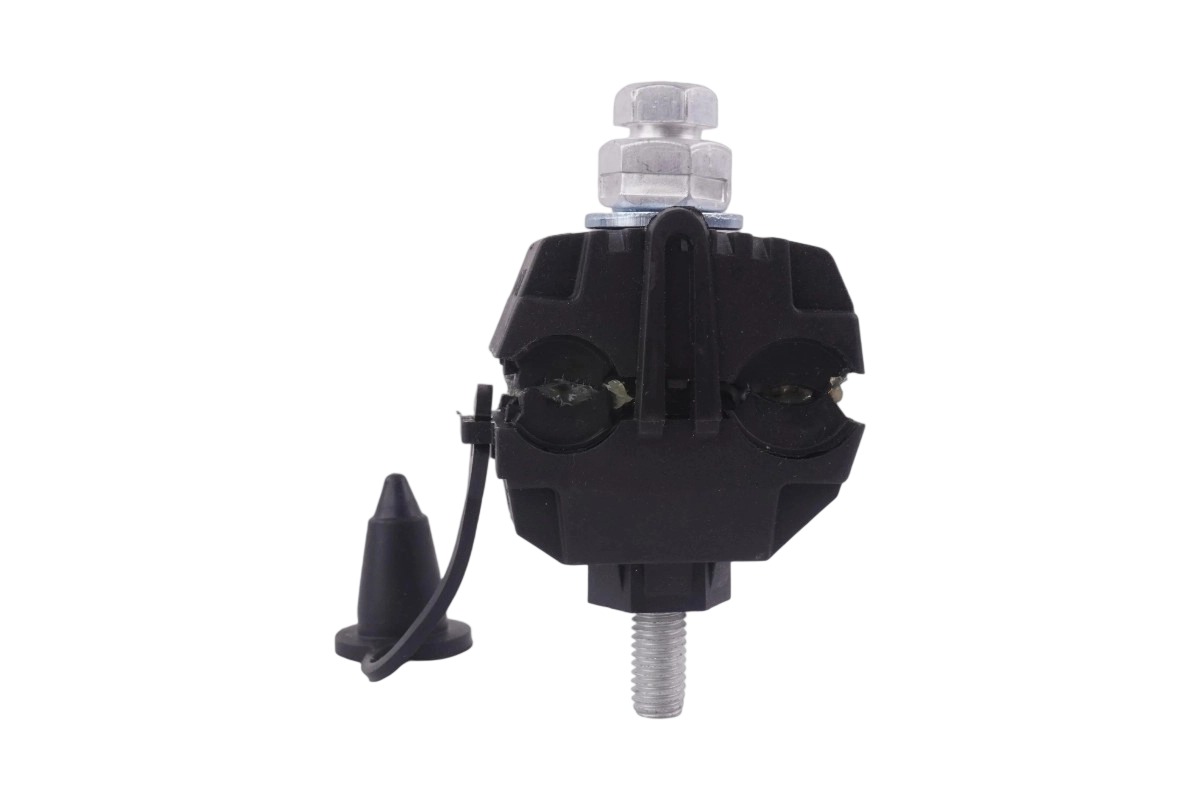
Basic factory specifications are completely insufficient for utility-grade projects. Manufacturers often publish internal performance claims. These internal claims rarely reflect harsh field conditions. You must demand mandatory type-testing data. Independent laboratories must verify these performance metrics. True standard compliance protects your entire network infrastructure.
Water penetration destroys live networks instantly. Quality aerial cable accessories undergo rigorous underwater testing. Technicians submerge the fully assembled joint in a water bath. They apply a 6kV electrical load for exactly one minute. The unit must not leak current into the water. This dielectric voltage withstand test proves the seal works. Only accept products passing this specific underwater baseline.
Temperatures fluctuate wildly across day and night cycles. These fluctuations expand and contract the metal components. Substandard plastics warp and lose their grip. You must assess vendor data regarding extreme temperature cycling. The devices undergo hundreds of thermal shock cycles in laboratory chambers. They also endure intense ultraviolet radiation exposure. High-quality polymers retain their structural integrity after months of simulated aging. This data proves long-term field viability.
Do not guess about component reliability. Rely on established international standard frameworks. The EN 50483-4 standard dictates rigorous testing for these specific components. The NFC 33-020 standard provides another globally recognized benchmark. Regional utility equivalents also provide excellent baseline metrics. Shortlist only those products carrying explicit, documented certification. Request the actual lab certificates. Verify the dates and testing parameters. This strict adherence mitigates legal liability. It guarantees robust environmental resilience across your service territory.
Even perfectly engineered parts fail during sloppy installations. Project managers must understand field realities. Crews face difficult conditions high above the ground. You must bridge the gap between theoretical engineering and daily field practice.
Live-line working demands absolute safety protocols. Technicians manipulate components while electrical current flows. Full PPE compatibility is strictly required. You must specify fully insulated connector bodies. The installer must never touch live metal potentials during the tightening phase. Captive shear-bolts provide this essential isolation. They keep the metal wrench safely separated from the energized conductor core. This physical barrier saves lives daily.
Field crews sometimes adopt dangerous shortcuts. You must train teams to avoid these specific failures:
Re-using previously sheared devices: This is strictly prohibited. Once the torque-limiting head shears off, the piercing teeth are permanently set. Reusing them ruins electrical contact. It also destroys the environmental seal.
Mismatched piercing profiles: Installers sometimes use the wrong model for a specific insulation thickness. Shallow teeth will not reach the core. Overly long teeth will puncture out the other side.
Improper end-cap insertion: Technicians occasionally forget to insert the branch cable fully into the elastomeric cap. This omission creates an open funnel. Rainwater tracks directly down the capillary spaces between wire strands.
Project managers must conduct rigorous visual inspections. You can verify proper installation from the ground using binoculars. Look for the cleanly sheared bolt heads. Verify the absence of the top nut. Check for visible silicone grease extrusion around the cable entry points. This slight grease bleed proves the cavity is fully packed. Finally, ensure correct perpendicular positioning relative to the main line. Crooked placement indicates uneven tooth penetration.
Procurement teams need a systematic vendor evaluation process. You cannot treat these devices as simple commodity hardware. They are highly engineered electrical junctions. Your shortlisting logic must prioritize transparency and consistency.
Never accept internal manufacturer summaries as proof of performance. You must require independent, third-party laboratory test reports. Reputable vendors happily supply detailed ISO laboratory findings. They provide complete thermal cycling graphs. They offer photographic evidence of underwater voltage tests. If a vendor hesitates to provide external lab data, disqualify them immediately. Transparency separates premium suppliers from dangerous counterfeiters.
Evaluate vendors who manufacture cohesive suites of line hardware. Superior suppliers offer comprehensive ecosystems. They produce complementary suspension clamps, tensioners, and mounting brackets. Sourcing from a single ecosystem guarantees perfect component interoperability. The physical dimensions align perfectly. The metallurgical compositions match. This cohesive approach prevents unpredictable mechanical conflicts on the utility pole.
Assess the stability of the vendor supply chain. Extended lead times disrupt major grid expansion projects. You need partners demonstrating consistent manufacturing output. Investigate their raw material sourcing strategies. Finally, scrutinize the scope of their defect warranty. The warranty must cover real-world deployment conditions. It should account for regional climatic extremes. Strong warranties indicate deep manufacturer confidence. They provide essential financial protection for massive infrastructure investments. Focus entirely on reliable delivery and proven product longevity.
We must reiterate a fundamental engineering reality. These small devices are high-stakes components masquerading as commodity hardware. Their failure directly causes extensive network blackouts. They dictate the safety of your maintenance crews and the reliability of your power delivery. You cannot afford to compromise on their technical specifications.
We strongly advise buyers to prioritize proven reliability. Demand verified shear-bolt mechanisms. Insist upon absolute, documented environmental sealing. Require strict adherence to international testing standards like EN 50483. These engineering realities matter far more than baseline initial unit costs. Quality components eliminate recurring emergency maintenance trips.
Take immediate action to secure your distribution network. Request a comprehensive technical consultation with an accredited manufacturer today. Download their detailed specification sheets. Submit your specific project parameters for a custom component review. Protect your infrastructure by choosing engineered excellence over cheap substitutes.
A: No. Once the torque-limiting head shears off, the piercing teeth are permanently set into the conductor. Removing and reusing the device entirely compromises electrical contact pressure. It also destroys the internal environmental sealing mechanism.
A: No. The primary advantage of this accessory is its integrated piercing teeth. These teeth actively puncture the insulation layer to make secure contact with the inner conductor. This completely maintains the cable's original weather integrity.
A: Specify bi-metallic components. These feature specifically plated contact plates, typically utilizing tin-plated copper or specialized alloys. They also incorporate thick barrier greases to safely bridge dissimilar metals and block moisture.
A: Yes, provided they are explicitly rated for live-line procedures. Look for fully insulated external bodies and captive shear-bolts. These features actively prevent the installer from making accidental contact with live electrical potentials during tightening.
