
Views: 0 Author: Site Editor Publish Time: 2026-08-25 Origin: Site


Modern power distribution demands absolute reliability. Utilities are rapidly shifting from traditional bare conductors to Aerial Bundled Cables (ABC) for urban and rural grids. Uninsulated lines often trigger sparks, fires, or dangerous outages during storms. Insulated ABC systems solve these exact vulnerabilities. However, the safety and longevity of an ABC network rely entirely on the mechanical and electrical integrity of its accessories. If a single clamp fails, the entire span risks immediate collapse. We framed this technical guide specifically for utility managers, procurement engineers, and contractors. You need to evaluate supplier capabilities effectively. You must assess component reliability to prevent grid failure and minimize lifecycle costs. Ahead, you will learn how to select durable hardware. We will cover critical testing metrics and installation realities. You will also discover how to verify international standard compliance before signing your next supplier contract.
High-quality aerial cable accessories directly reduce utility maintenance costs and mitigate outage risks caused by severe weather or mechanical stress.
Selecting the right LV ABC accessories requires matching environmental conditions with specific material grades (e.g., UV-resistant polymers, corrosion-resistant alloys).
Improper installation of critical components like anchor clamps or insulation piercing connectors (IPCs) is the leading cause of premature network failure.
Verifiable compliance with international standards (such as NFC 33-020 or EN 50483) is the most reliable baseline for supplier shortlisting.
Utility operators face constant pressure to maintain continuous power flow. Traditional bare wire systems leave grids vulnerable to unpredictable environmental factors. Upgrading distribution infrastructure directly addresses these vulnerabilities. Modernizing the grid requires strategic planning and a deep understanding of component behavior.
Tree branches, wildlife, and high winds constantly threaten bare wire networks. A single falling branch can bridge two uninsulated lines. This event triggers an immediate short circuit. Insulated systems prevent these exact scenarios. Purpose-built accessories hold these insulated lines securely in place. They prevent cables from chafing against utility poles or surrounding structures. When you eliminate exposed conductors, you drastically reduce transient faults. Grid reliability metrics, such as SAIDI and SAIFI, improve significantly after a network upgrade.
Financial planners must distinguish between proactive investments and reactive expenses. Purchasing premium components requires a higher initial budget. However, proactive component investment makes long-term financial sense. Reactive emergency repairs drain utility budgets quickly. Dispatching a repair crew during a midnight ice storm costs substantially more than buying a high-grade clamp. Every hour of utility downtime damages revenue and public trust. High-quality accessories resist environmental degradation. They stay functional for decades, ensuring you avoid constant replacement cycles.
Municipal regulations now demand stricter safety measures for overhead lines. Eliminating live-wire exposure mitigates serious public liability. Accidental contact with bare lines causes severe injuries and fatalities every year. Modern municipal codes require utilities to eliminate these risks in residential zones. You must adhere to regional utility regulations. Upgrading to bundled systems is no longer optional. It remains a strict operational necessity to protect both utility workers and local residents.
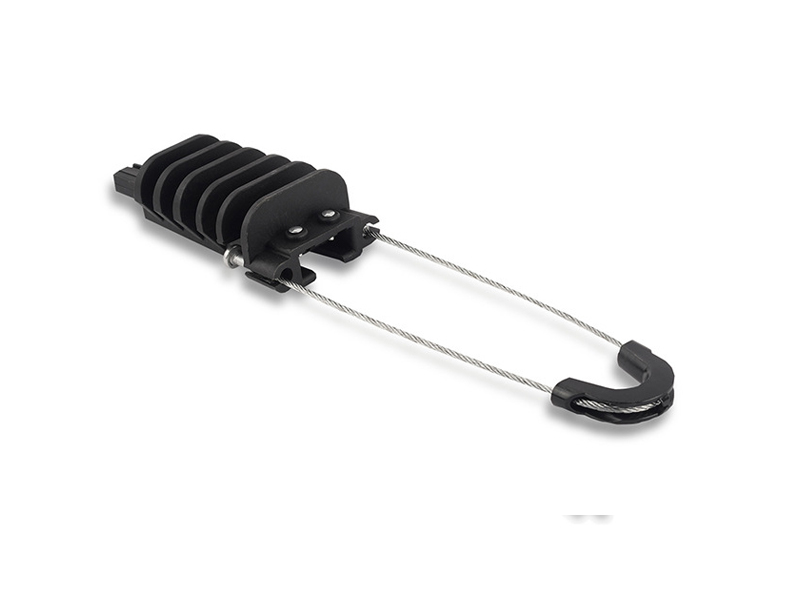
Building a resilient network requires specialized hardware. Each component serves a distinct mechanical or electrical purpose. Understanding these categories helps engineers design safer spans. You must source reliable LV ABC accessories to maintain system integrity.
These components absorb the primary mechanical stress of the network. They secure the line at the beginning, end, or sharp turning points of the distribution route. You rely on anchor clamps to maintain the necessary line tension. Design variables play a crucial role here. Manufacturers utilize self-adjusting wedges to grip the cable tightly without crushing the insulation. Bail materials vary based on the environment. You might choose stainless steel for coastal areas or heavy-duty galvanized steel for dry inland zones. You must ensure compatibility with specific messenger wire diameters to prevent line slippage.
While tension components pull the line tight, suspension components hold it up. They support the continuous run of bundled cables on intermediate poles. A well-designed suspension clamp cradles the cable. It supports the heavy bundle without damaging the delicate outer insulation. Key design variables include tool-free installation mechanisms. These allow linemen to secure the cable rapidly. Breaking load limits dictate how much weight the clamp can safely hold before yielding. Premium designs also feature articulation. Articulation allows the clamp to move slightly, absorbing wind-induced oscillation and preventing structural fatigue.
IPCs revolutionize how linemen tap into live networks. They create secure electrical tap connections without stripping cable insulation. Piercing teeth penetrate the outer jacket and bite directly into the conductor. Critical design variables include shear-head bolts. These bolts snap off when the installer reaches the precise torque required for optimal electrical contact. This mechanism eliminates human guessing. IPCs must feature watertight seals rated IP67 or higher. Moisture ingress causes rapid corrosion. Bimetallic compatibility remains another essential feature. If you connect an aluminum main line to a copper tap, you need specialized teeth to prevent galvanic corrosion.
Supporting hardware holds the primary accessories in place. Pole brackets bolt directly to the concrete or wooden utility pole. They provide a secure mounting point for clamps. Stainless steel strapping allows installers to attach brackets onto poles where drilling is impossible. Dead-end grips wrap around the cable, providing an alternative tensioning method for specific network designs. We must treat these secondary items with the same scrutiny as primary components.
Component Category | Primary Function | Critical Design Feature | Installation Risk |
|---|---|---|---|
Tension / Anchor | Secure cable at dead-ends and sharp angles. | Self-adjusting insulated wedges. | Under-tensioning causes excessive cable sag. |
Suspension | Support straight continuous cable runs. | Articulated joints for wind oscillation. | Crushing insulation via over-tightening. |
Piercing Connectors | Create safe, waterproof electrical taps. | Shear-head bolts for precise torque. | Using non-bimetallic IPCs on mixed metals. |
Mounting Hardware | Anchor primary clamps to utility poles. | High-grade stainless steel alloys. | Using weak strapping on heavy spans. |
Procurement teams cannot rely on visual inspections alone. You need measurable indicators to verify quality. The market contains many counterfeit or low-grade products. Deploying inferior aerial cable accessories guarantees catastrophic grid failures. We recommend evaluating every supplier against strict environmental, mechanical, and electrical benchmarks.
Polymer parts endure brutal outdoor conditions. They face decades of relentless sun, freezing rain, and pollution. Standard plastics become brittle and shatter under these conditions. You must demand UV-stabilized fiberglass-reinforced plastics (FRP). UV stabilization prevents the polymer chains from breaking down over time. Metal parts require equal scrutiny. Corrosion resistance standards dictate the survival of bails and bolts. Coastal environments expose metals to salt spray. High-pollution industrial zones introduce acidic moisture. You should specify high-grade stainless steel or heavily galvanized alloys for these challenging regions.
Best Practice: Always request accelerated weathering test reports for plastic components.
Common Mistake: Accepting standard commercial-grade plastics to save on initial procurement budgets.
Every accessory must pass rigorous laboratory tests. Tensile strength verification ensures the clamp will not drop the cable. Laboratories measure slip loads to see when the cable begins to slide through the wedges. They measure breaking loads to determine the absolute failure point of the clamp body. Electrical components undergo dielectric voltage testing. This test proves the insulation can withstand high voltage surges without leaking current. Thermal cycling performance tests the connector under extreme temperature shifts. Laboratories heat the IPC under heavy electrical load, plunge it into cold water, and verify that the watertight seal remains intact.
Utility buyers must demand hard documentation. You should only purchase components proving compliance with recognized standards. CENELEC EN 50483 and NFC 33 represent the global gold standards for ABC networks. These frameworks dictate strict testing protocols for every clamp and connector. Emphasize the importance of independent, third-party laboratory testing. Self-reported manufacturer data often hides critical flaws. Third-party testing ensures an unbiased evaluation of the product. If a supplier hesitates to provide independent certifications, you should immediately disqualify them from your bidding process.
Even the finest hardware fails if installed incorrectly. Human error accounts for a massive percentage of early grid breakdowns. Managing field crews requires clear protocols. You must understand how installation variables affect system longevity.
Proper tensioning defines the structural health of the network. The risks of over-tightening IPCs remain severe. If an installer applies too much torque manually, they crush the internal conductor strands. This creates a high-resistance hot spot. Eventually, the connection melts and catches fire. Conversely, under-tensioning line clamps leads to excessive cable sag. Sagging lines swing violently during windstorms. They place immense structural strain on the utility poles. You must provide crews with calibrated tools or source hardware equipped with automatic torque-limiting mechanisms.
Engineers cannot guess pole spacing. You must calculate clearance and span lengths meticulously. Several environmental factors influence these calculations.
Thermal Expansion: Cables elongate during hot summer months, increasing sag. You must ensure they maintain safe ground clearance.
Ice Loading: Winter storms coat lines in heavy ice. This added weight multiplies the downward force on suspension hardware.
Wind Shear: High winds push the cable horizontally. Hardware must resist these lateral forces to prevent structural fatigue.
You factor these three elements together when determining clamp spacing and pole hardware positioning. Ignoring any single variable compromises the entire grid segment.
Rapid, large-scale deployments require dozens of contractor crews. Skill levels vary wildly among these workers. You must simplify the installation process. This is why standardized, tool-limiting accessories prove invaluable. Components like shear-head bolts reduce human error drastically. The bolt head breaks off automatically when the connection achieves perfect compression. The installer cannot over-tighten it. They cannot under-tighten it. Investing in standardized hardware practically eliminates installation variance across large field teams.
Selecting a manufacturing partner requires more than reading a price sheet. You are entering a decades-long relationship. Your procurement logic must evaluate the supplier's operational infrastructure. We recommend focusing on manufacturing consistency, transparency, and engineering support.
Pilot projects require a few hundred clamps. Regional grid upgrades require hundreds of thousands. You must assess a supplier's ability to maintain batch consistency across high-volume orders. Ask for their quality assurance (QA) transparency records. Do they test raw materials upon arrival? Do they pull random samples from the assembly line for destructive testing? A robust QA system prevents a bad batch of plastic from reaching your utility poles.
If a component fails in the field five years from now, you need answers. Traceability provides those answers. Ensure components feature clear batch numbering molded directly into the plastic or stamped into the metal. Manufacturers must include production dates and standard markings. This data allows for precise post-installation auditing. If you discover a manufacturing defect, batch numbers let you isolate and replace only the affected components, saving millions in unnecessary maintenance costs.
A true manufacturing partner provides heavy technical support. Evaluate vendors based on their willingness to assist your engineering teams. Will they provide localized load calculations for your specific climate zone? Do they offer field installation training for your local contractors? Will they conduct custom sample testing prior to contracting? Suppliers who refuse to provide engineering support often lack confidence in their own products. Partner only with organizations that stand behind their hardware with measurable technical expertise.
Grid reliability is only as strong as its weakest connection point. Investing millions in premium insulated cables means nothing if you support them with fragile, low-grade hardware. A single failed clamp compromises public safety and triggers expensive emergency repairs.
Rigorous vetting of materials and strict adherence to international standards vastly outweigh any initial unit-cost savings. The lifecycle efficiency of a proactive investment always beats the hidden costs of reactive grid maintenance.
Evaluate your current network failure points and document recurring hardware issues.
Update your procurement policies to mandate UV-stabilized plastics and third-party EN 50483 testing.
Implement shear-head IPCs to eliminate field installation torque errors.
Prompt your engineering or procurement officers to request technical data sheets, compliance certificates, or a technical consultation for your next major grid project.
A: High-quality components typically last 20 to 40 years. This lifespan depends heavily on UV exposure levels, material grades, and strict adherence to installation guidelines. Harsh coastal or industrial environments may shorten this duration unless you use corrosion-resistant alloys and premium UV-stabilized plastics. Regular inspections help maximize component longevity.
A: No, you cannot use standard piercing connectors for mixed metals. You must use bimetallic connectors equipped with tinned copper or specific aluminum alloy piercing teeth. These specialized teeth prevent galvanic corrosion. Galvanic corrosion rapidly degrades electrical connections and creates severe fire hazards within the distribution network.
A: Proper sizing relies on your specific system design. For messenger-supported systems, you size the clamp based on the cross-sectional area of the neutral messenger wire. For self-supporting systems, you must measure the entire bundle diameter. Always consult manufacturer data sheets to match the clamp perfectly to your cable dimensions.
A: You should request several critical documents before purchasing. Always ask for valid ISO 9001 certifications and independent, third-party type test reports (like NFC 33 or EN 50483). Additionally, request raw material origin certificates and comprehensive warranty terms. This documentation guarantees verifiable performance and protects your long-term infrastructure investment.
