
Views: 0 Author: Site Editor Publish Time: 2026-07-18 Origin: Site


Connecting aluminum cables to copper terminals introduces inherent engineering risks. In low voltage systems, this transition point often becomes a critical weak link. Galvanic corrosion and thermal expansion mismatch naturally occur when these two dissimilar metals meet. Using standard copper or aluminum lugs for these joints frequently leads to severe degradation. Connections overheat, internal components degrade, and eventual system failure becomes inevitable over time. Precision friction-welded bimetallic cable lugs act as the definitive isolation bridge. They ensure long-term electrical and mechanical stability across your infrastructure. This guide breaks down specific applications and material science realities. We will explore the framework criteria needed to specify the correct bimetallic series accurately. You will learn how to secure your infrastructure against joint failure while adhering to strict electrical standards effortlessly.
Bimetallic cable lugs neutralize galvanic corrosion between aluminum conductors and copper busbars through precision friction welding.
Application in LV systems spans switchboards, motor control centers, and secondary transformer connections where dissimilar metals meet.
Evaluating between specific models, such as the DTL-4 Insulated Bimetal Lug and the DTL-8 European Bimetallic Crimp Terminal, requires aligning with regional compliance standards and environmental constraints.
Proper installation requires specialized hexagonal crimping and the use of jointing compounds to prevent immediate oxidation, mitigating the highest risk of implementation failure.
You must first understand the galvanic threat. Copper and aluminum share a volatile electrochemical relationship. When atmospheric moisture enters a standard joint, it acts as a conductive electrolyte. This moisture creates a tiny, destructive galvanic cell. Aluminum acts as the anode. Copper acts as the cathode. The significant electrochemical potential difference forces the aluminum to corrode rapidly. This process eats away the conductive material mercilessly. The joint loses structural integrity over months or years.
Thermal cycling introduces severe mechanical risks. Operating electrical systems generate substantial heat continuously. Aluminum expands approximately 33% more than copper under identical temperature loads. As power cycles on and off, the joint continually expands and contracts. Differing expansion rates cause standard connectors to loosen over time. Engineers call this mechanical phenomenon "creep." The aluminum wire expands, encounters the rigid copper lug, and deforms plastically. When the system cools, the aluminum shrinks. It leaves a microscopic air gap. This gap increases electrical resistance. Higher resistance generates even more heat. You eventually trigger a dangerous thermal runaway cycle.
We must examine the business impact of inaction. Joint failure translates directly to massive operational disruptions. Standard standard lugs fail predictably under stress.
Unplanned Downtime: Sudden power losses force complete facility shutdowns. Production lines halt abruptly. You lose critical operational hours.
Arc Flash Risks: High-resistance gaps spark catastrophic electrical explosions. These events vaporize metal and severely endanger personnel nearby.
Maintenance Overhead: Facility technicians waste countless hours manually retorquing degraded standard connections. They constantly chase loose wires across panels.
You must address these physical realities to maintain safe power distribution. Ignoring material science always leads to infrastructure breakdown.
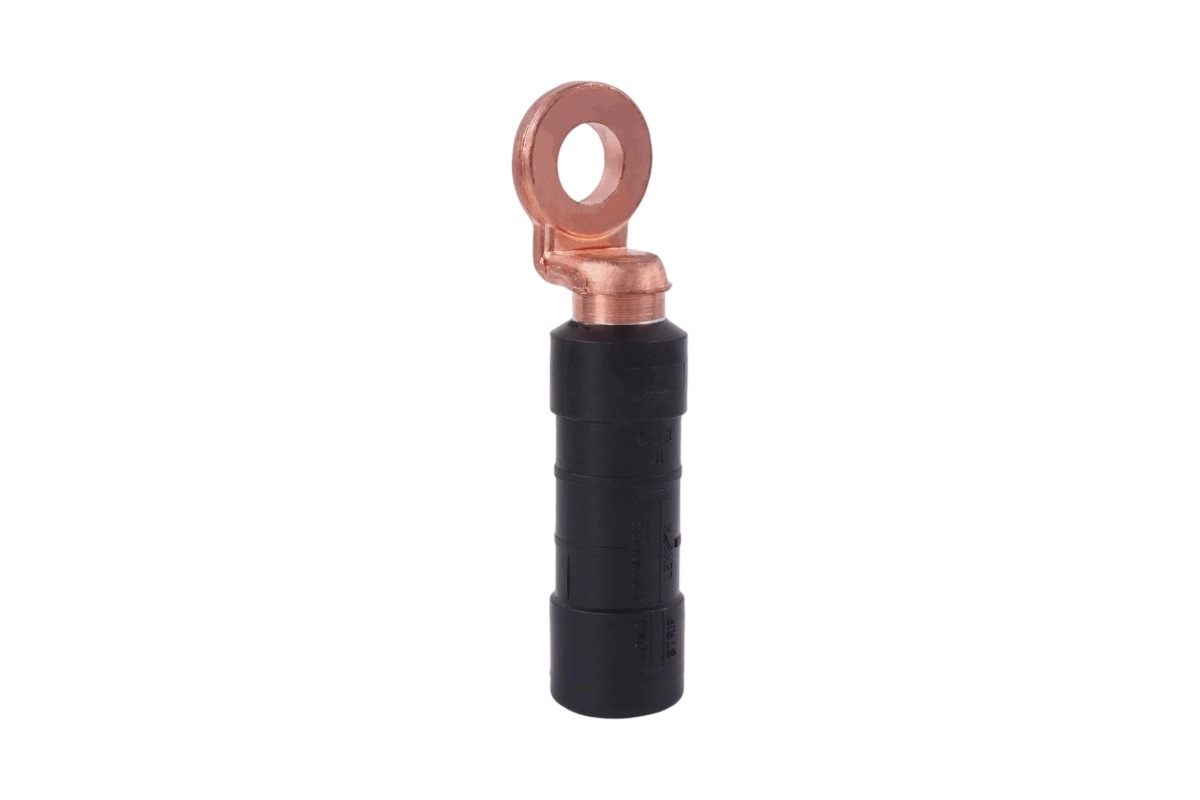
Understanding the manufacturing reality reveals why these components succeed. Manufacturers utilize an advanced technique called friction welding. They fuse a pure copper palm directly to a pure aluminum barrel. They accomplish this impressive feat without any filler metals. One component spins at high velocities. The other presses against it under immense hydraulic force. The resulting friction generates exact, localized heat. The two metals plasticize and mix at the molecular level. This permanent fusion creates a perfect hermetic seal. Atmospheric moisture cannot penetrate the bonded seam. Galvanic corrosion simply cannot initiate.
Consider the primary LV applications across industrial facilities. You will see these specialized connectors bridging critical gaps daily.
Main Distribution Boards: Technicians use them for terminating large aluminum utility feed cables. They connect these main feeds directly into copper-busbar systems safely.
Switchgear Connections: They connect incoming aluminum wiring to copper switchgear terminals. You also see them heavily deployed on molded case circuit breakers (MCCBs).
Earthing Systems: They provide secure transitions in grounding grids. Soil moisture makes subterranean earthing points highly susceptible to rapid galvanic decay.
Capping oxidation represents the final technical hurdle. Aluminum instantly forms a tough oxide layer when exposed to air. This microscopic oxide acts as a powerful electrical insulator. Manufacturers solve this issue by pre-filling the aluminum barrel. They inject a specialized conductive grease. We call this a jointing compound. It usually contains microscopic abrasive zinc particles. When you compress the barrel, the tooling forces the compound through the cable strands. The abrasive zinc breaks down the stubborn aluminum oxide layers. It prevents oxygen from re-entering the delicate joint. This guarantees a clean, low-resistance electrical pathway.
Best Practice: Never wipe away the factory-applied jointing compound inside the barrel. It remains crucial for long-term conductivity. Removing it invites immediate oxidation.
Standard configurations handle controlled indoor environments exceptionally well. However, harsh industrial settings demand specialized engineering. You must evaluate application-specific designs to ensure longevity.
This component features an advanced design profile. Manufacturers integrate a robust insulated sleeve directly over the transition joint. This covering forms an integral part of the product architecture. It provides an immediate dielectric barrier.
You will deploy the DTL-4 Insulated Bimetal Lug primarily in high-moisture environments. Wastewater treatment plants and coastal substations represent perfect use cases. Engineers also specify them for highly compact electrical enclosures. Tight spacing elevates phase-to-phase short-circuit risks dramatically. The integrated dielectric barrier prevents accidental arcing between adjacent electrical phases.
You must evaluate specific metrics before procurement. Assess the temperature rating of the insulation material carefully. Ensure it matches the maximum ambient heat of your enclosures. You must also verify its UV resistance if you plan outdoor deployments. Sunlight degrades standard plastics quickly, leaving the joint exposed.
The design profile of this variant adheres strictly to European dimensional standards. It follows rigorous DIN specifications carefully. You will often notice an extended aluminum barrel. The copper palm dimensions perfectly match standard metric bolt sizes.
Facilities adhering to strict European electrical codes heavily favor the DTL-8 European Bimetallic Crimp Terminal. Heavy-industrial LV systems also require their high tensile strength. High-vibration environments like manufacturing plants demand exceptional mechanical grip. The extended barrel accommodates multiple crimp points easily. This maximizes pull-out resistance under heavy mechanical stress.
Your primary evaluation metric involves verifiable compliance. Look for explicit IEC standard certifications. Furthermore, you must ensure rigid tooling compatibility. Your installation teams need metric DIN-standard crimping dies. Proper dies ensure perfect compression geometry and prevent mechanical failure.
Procuring inferior components introduces hidden systemic vulnerabilities. You must establish a rigid framework for shortlisting manufacturers. We recommend evaluating four critical dimensions to ensure absolute safety.
Evaluation Criteria | Standard Requirement | Engineering Impact |
|---|---|---|
Material Purity Standards | Copper >99.9%, Aluminum >99.5% | Lower purity introduces microscopic impurities. These act as tiny resistors and cause joint heating. |
Weld Integrity Testing | Destructive tensile and bending tests | Ensures the friction-welded seam will not fracture under heavy mechanical loads or extreme vibration. |
Dimensional Tolerances | Exact inner diameter (ID) matching | Guarantees proper compression. Matches Class 2 stranded or Class 5 flexible conductors perfectly. |
Compliance & Certifications | Verifiable IEC 61238-1 approval | Proves the connector passes strict thermal cycling and mechanical short-circuit tests. |
Demand strict specifications on material purity. You want copper exceeding 99.9% purity. Aluminum must exceed 99.5%. Some vendors dilute metals to reduce their production expenses. This unethical practice introduces dangerous resistance into your network. It compromises the entire electrical panel.
You must request evidence of destructive weld testing. Reputable vendors perform frequent tensile pull tests. They also conduct rigorous bending tests on the seam. A high-quality weld proves stronger than the base aluminum. If the joint snaps directly at the weld line, the manufacturing process remains flawed.
Pay close attention to dimensional tolerances. The inner diameter of the aluminum barrel must perfectly match your conductor class. Class 2 stranded wires pack differently than Class 5 finely stranded flexible wires. The empty void space between strands varies significantly. Thus, the inner diameter tolerance must account for this specific difference. A loose fit guarantees eventual failure.
Always look for verifiable IEC 61238-1 compliance. This international standard tests compression and mechanical connectors for power cables. It validates thermal stability across thousands of load cycles. Components passing this test handle short circuits safely.
Even premium hardware fails if installed incorrectly. You must control implementation variables tightly to ensure success.
Tooling compatibility represents your largest operational risk. Under-crimping leaves dangerous air gaps inside the barrel. Moisture infiltrates these tiny voids instantly. Over-crimping crushes the delicate aluminum strands severely. It drastically reduces the mechanical strength of the wire. You must mandate the use of calibrated, hexagonal hydraulic crimping tools. You need to match the die size exactly to the lug's specific outer dimensions. Hexagonal crimps apply uniform radial pressure. This creates a solid, void-free cold weld.
Common Mistake: Using cheap indent crimpers on bimetallic joints. Indent tools distort the circular geometry entirely. They frequently destroy the delicate friction-welded seam.
Follow rigid preparation protocols on site to ensure maximum connectivity.
Measure and strip the cable jacket to the precise barrel depth. Do not nick the underlying metal strands.
Aggressively wire-brush the bare aluminum conductor. You must perform this action immediately before insertion. Aluminum oxidizes within seconds of air exposure.
Insert the brushed conductor straight into the barrel. Ensure you do not remove or contaminate the pre-filled anti-oxidation compound.
Implement rigorous inspection audits after installation. Post-crimp visual checks catch simple errors early. Look for a tiny extrusion of jointing compound at the barrel edge. This visible extrusion proves the inner void is fully packed. You must also mandate thermal imaging audits. Scan the panels under initial heavy load. Low surface temperatures verify a successful, low-resistance connection. Hot spots indicate an immediate need for replacement.
Bimetallic connectors act as essential safety barriers. They are not a discretionary upgrade for your infrastructure. They stand as a baseline requirement for safe Al-Cu connections in modern LV systems. Their specialized construction neutralizes chemical degradation permanently.
Base your procurement decisions on rigorous logic. Match the exact cable cross-sections to the appropriate lug dimensions. Always respect regional standard requirements. Specify European standard components for EU compliance environments. Demand absolute transparency from vendors regarding their internal weld testing protocols.
Take immediate action to secure your networks. Review your current Bill of Materials carefully. Look at all upcoming distribution panel installations. Identify any transitions between dissimilar metals. Ensure you replace standard aluminum lugs with appropriate bimetallic alternatives. Proactive replacement prevents catastrophic system failures down the line.
A: No. Paste alone cannot prevent the eventual galvanic corrosion and thermal loosening. A friction-welded bimetallic lug is required.
A: While designed primarily for LV (up to 1kV) systems, specific medium-voltage variants exist. Always verify the manufacturer's dielectric and tracking data for applications above 1000V.
A: No. The crimping process causes irreversible plastic deformation of the aluminum barrel. They must be cut off and replaced if the connection is altered.
