
Views: 0 Author: Site Editor Publish Time: 2026-07-19 Origin: Site


Modern electrical installations face a fundamental engineering risk every single day. Connecting aluminum cables directly to copper busbars or terminals creates inevitable galvanic corrosion and severe thermal expansion mismatches. Ignoring this crucial metallurgical reality often leads to catastrophic joint failures. Today, the global electrical industry rapidly shifts toward lightweight, highly cost-effective aluminum wiring for large-scale distribution. This massive transition exponentially increases the absolute necessity for incredibly reliable transition joints across commercial grids. Properly engineered bimetallic cable lugs are not just a simple best practice for modern engineers. They serve as a critical compliance and safety requirement. You will learn exactly how these specialized components eliminate high-resistance hot spots. We will deeply explore the advanced friction welding process, practical field implementation best practices, and rigorous procurement evaluation criteria. Ultimately, you will understand exactly why matching the right connector to the metal matters so much.
Prevents Galvanic Corrosion: Bimetallic lugs separate the aluminum and copper surfaces at the molecular level, neutralizing the electrochemical reaction.
Handles Thermal Stress: Friction-welded joints accommodate the different expansion rates of aluminum and copper without loosening over time.
Standardizes Compliance: Utilizing purpose-built transition connectors ensures adherence to strict commercial electrical codes and fire safety standards.
When dissimilar metals interact inside an electrical panel, physics takes over completely. You simply cannot ignore the fundamental electrochemical incompatibility between aluminum and copper. In the standard galvanic series, aluminum acts as a highly active anode when placed next to copper. If you introduce any ambient moisture acting as an electrolyte, the aluminum degrades at an alarming rate. Electrons strip away from the aluminum surface. This invisible reaction actively weakens the physical connection and aggressively spikes electrical resistance. Over several months, the joint essentially eats itself from the inside out.
Thermal expansion discrepancy adds another severe layer of mechanical risk. Aluminum expands roughly one-third more than copper under the exact same electrical load. During normal daily heating and cooling cycles, standard rigid copper connectors severely restrict this expansion. The trapped aluminum wire forcefully deforms against the tight enclosure. When the load drops and the metals cool down, they contract. Over time, standard connectors experience a phenomenon known as "creep." This creeping effect results in dangerously loose connections. Loose connections invite invisible micro-arcing, carbon buildup, and eventually, severe panel fires.
Furthermore, pure aluminum possesses an aggressive, natural oxidation barrier. It forms a highly resistive oxide layer immediately upon any air exposure. Pure copper does not oxidize nearly as fast or as aggressively. Standard copper lugs cannot pierce or mitigate this invisible, glass-like shield. Mechanical wire brushing and specialized chemical pastes become absolutely mandatory. We must physically break this insulating layer before making the final crimp. If you skip this mitigation, the joint will run dangerously hot from the very first minute of operation.
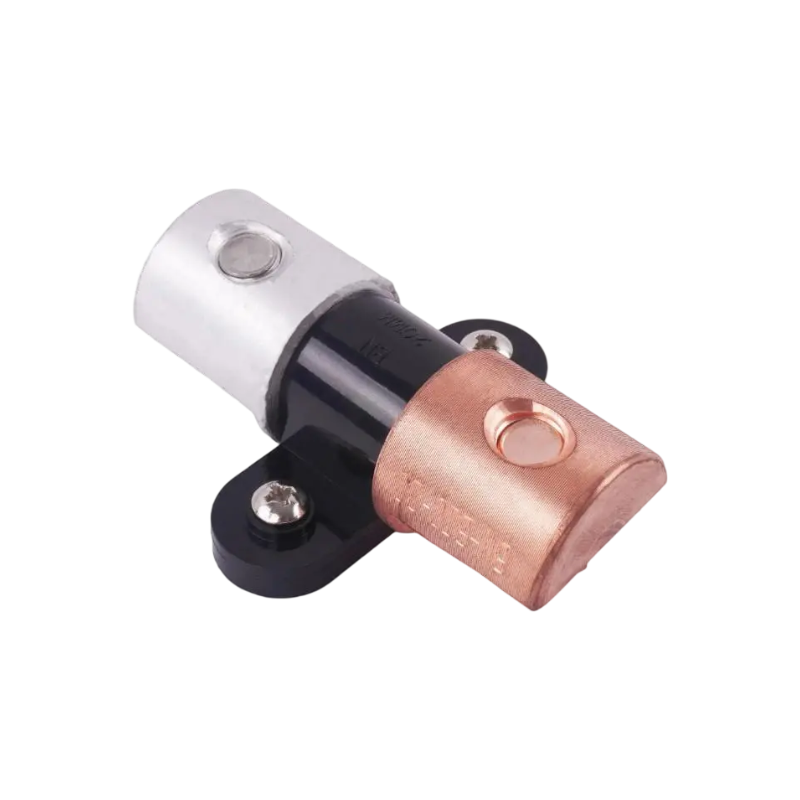
Engineers developed the Copper Aluminum Bimetallic Transition Connector specifically to solve these dangerous fundamental flaws. The engineering magic lies primarily in the advanced friction welding process. Manufacturers spin a raw aluminum barrel against a solid copper palm at incredibly high speeds. The intense mechanical friction generates massive localized heat. This process physically fuses the two distinct metals together into a solid, unbroken molecular bond. It permanently eliminates the microscopic gaps where ambient moisture and aggressive electrolytes typically accumulate. The metals become one continuous piece.
Capping the barrel represents another crucial design feature for long-term survival. Quality bimetallic connectors feature a completely closed end right at the transition point. They thoroughly seal the exposed cable end from constant environmental oxidation. Moisture simply cannot penetrate the actual fused joint line. This structural isolation effectively starves the galvanic reaction of the liquid electrolyte it needs to survive. It provides a permanent defense mechanism against unpredictable weather conditions or humid industrial environments.
Mechanical integrity remains paramount, especially in high-vibration industrial environments. A true friction-welded bimetallic joint offers incredible tensile strength. Real-world laboratory testing often shows this fused joint easily exceeds the baseline pulling strength of the bare aluminum cable itself. You ensure exceptional long-term mechanical stability. Facility managers and maintenance teams can sleep soundly knowing the vital connection will not pull apart under heavy mechanical stress, sudden load spikes, or severe temperature fluctuations.
Selecting the right component requires strict, objective evaluation. You must analyze specific manufacturing indicators before approving any connector for your critical infrastructure project.
Always assess the visual and ultrasonic indicators of a clean friction weld. Avoid purchasing lugs showing visible porosity, rough edges, or brittle flash zones. A jagged, uneven, or porous weld line clearly indicates extremely poor manufacturing control. Furthermore, verify the basic purity of the raw materials. The absolute best manufacturers strictly use 99.9% pure electrical-grade copper and highly refined commercial-grade aluminum. High material purity guarantees maximum electron flow, superior thermal dissipation, and minimal resistance across the critical transition point.
Evaluate standard compression lugs, such as the highly common DTL series, for permanent, high-vibration environments. Traditional hydraulic crimping delivers an incredibly reliable, tamper-proof joint when executed correctly by trained professionals.
Conversely, you should actively evaluate the Bolt Type Bi-metal Cable Lug for complex or remote field installations. These modern variants utilize advanced shear bolt technology. They prove invaluable in tight spaces where precise hydraulic crimping tools remain physically unavailable. The specialized bolts snap off automatically at a specific, predetermined torque value. They highlight built-in torque control, entirely removing dangerous human error and under-tightening risks from the installation process.
Always verify if the aluminum barrel comes heavily pre-filled with a highly conductive, oxide-inhibiting compound. Premium lugs include this essential grease directly from the factory floor. They also feature a tight protective cap over the barrel opening. This simple plastic cap prevents the critical paste from drying out or degrading during rough shipping and long-term storage. The compound chemically prevents aggressive new oxide formation immediately after you strip the wire, ensuring a perfect connection.
Connector Type Application Guide
Connector Specification | Required Installation Tooling | Torque Control Method | Ideal Deployment Scenario |
|---|---|---|---|
Compression (Crimp Style) | Heavy Hydraulic Crimper & Hex Dies | Manual (Relies entirely on tool calibration) | High-vibration machinery, permanent grid fixtures |
Shear Bolt Technology | Standard Ratchet or Socket Wrench | Automatic (Bolts physically shear off) | Remote field sites, confined panel spaces |
Even the highest quality connector fails miserably if installed poorly. Field execution strictly demands absolute adherence to metallurgical realities and proven procedures.
We must heavily emphasize the absolute necessity of aggressive wire brushing. You must brush the newly exposed aluminum conductor vigorously immediately before insertion. Aluminum oxidizes within a few seconds of exposure to ambient air. If you lazily skip this step, you trap a highly resistive, glass-like layer deep inside the joint. This common amateur mistake causes immediate thermal spikes under heavy electrical load, destroying the connector rapidly.
Tooling alignment heavily dictates the physical success of the final crimp. We need to discuss the serious risk of using improper die sets. Hexagonal crimping remains generally required for soft aluminum barrels. Hex dies ensure smooth, uniform radial compression around the entire circumference. Indent-style crimpers often cause severe micro-fracturing in the softer aluminum metal, destroying its structural integrity. Always match your exact die size meticulously to the specific lug specification printed on the barrel.
Follow a highly standardized installation sequence to eliminate unpredictable variables. We strongly recommend these distinct, non-negotiable steps:
Cut the aluminum cable perfectly squarely using proper ratcheting shears.
Strip the outer insulation carefully without nicking or scratching the delicate outer metal strands.
Brush the bare aluminum aggressively with a dedicated stainless-steel brush to remove the newly formed oxide layer.
Insert the conductor fully into the barrel, ensuring the pre-filled chemical compound thoroughly covers all exposed strands.
Crimp the aluminum barrel precisely, starting from the solid palm side and slowly working outward toward the open cable entrance.
Wipe away any excess greasy compound squeezed out during the heavy compression phase.
Upgrading your electrical hardware definitely requires careful financial justification and clear foresight. Standard components might initially seem cheaper on paper, but they introduce totally unacceptable operational hazards to your facility.
Acknowledge the direct, practical cost versus risk analysis immediately. High-quality bimetallic connectors certainly cost marginally more per individual unit than standard bare lugs. However, you must frame this minor premium directly against the catastrophic, crippling cost of a single thermal failure. An improperly terminated transition joint can easily spark a massive electrical panel fire. This leads directly to long facility shutdowns, ruined expensive equipment, and severely lost operational revenue. The minimal upgrade price clearly acts as an incredibly cheap, highly effective insurance policy for the entire building.
Consider the impressive lifecycle longevity of this specific engineering solution. Detail the highly expected maintenance-free lifespan of a properly crimped bimetallic transition. An un-mitigated, standard aluminum-to-copper joint strictly requires rigorous, expensive annual torque checks. You must continuously send paid technicians to physically tighten creeping connections. Conversely, a friction-welded bimetallic joint stays perfectly secure almost indefinitely. It easily survives decades of heavy thermal cycling without demanding any physical intervention or ongoing labor costs.
Finally, highlight the vital, undeniable role of strict compliance and commercial insurance. Senior electrical inspectors and commercial insurance underwriters actively look for proper bimetallic transitions. They routinely refuse to sign off on modern grid and industrial projects utilizing unapproved dissimilar metal joints. Demonstrating strict adherence to these established safety codes drastically simplifies your final project commissioning. It also robustly protects your broader enterprise liability if an unrelated, unexpected electrical fault occurs somewhere down the line.
System reliability strictly demands uncompromising attention to microscopic detail. Matching the exact right connector to the specific metallurgical reality of your cables remains absolutely non-negotiable for safety. Using standard copper components on aluminum wire practically guarantees an eventual, dangerous failure. Upgrading to a properly fused, friction-welded joint neutralizes aggressive galvanic corrosion instantly and solves the dangerous thermal expansion mismatch permanently.
Take immediate, decisive action to secure your electrical infrastructure today. Direct your senior procurement managers and field engineers to thoroughly review their current bill of materials. Audit your existing high-load transition points carefully for any early signs of dangerous thermal creep. If you currently rely on older, unverified transition methods, request a detailed technical spec sheet for DTL series compression options immediately. For challenging remote installations, explore modern shear-bolt alternatives. Upgrading today ensures a fundamentally safer, vastly more resilient power network tomorrow.
A: Yes. Connecting them directly creates severe risks. Standard copper or aluminum lugs will cause aggressive galvanic corrosion when exposed to moisture. Furthermore, their differing expansion rates cause thermal loosening over time. Only a verified bimetallic lug prevents both of these hazards safely, ensuring a highly secure and fully compliant electrical connection.
A: While technically possible, it remains completely unnecessary and highly inefficient. Pure copper-to-copper joints do not suffer from galvanic corrosion or mismatched thermal expansion rates. Stick to standard copper lugs for purely copper circuits. This practical approach minimizes overall electrical resistance and keeps your component costs strictly optimized without sacrificing safety.
A: The DTL series serves as a widely recognized industrial designation for standard copper-aluminum bimetallic lugs. This specific classification categorizes the heavy-duty connectors by their physical dimensions, flat palm size, and specific cable cross-section compatibility. They are primarily designed for high-pressure compression using standard hydraulic crimping tools in permanent commercial installations.
A: Bolt-type (shear-bolt) lugs entirely eliminate the absolute need for heavy, expensive hydraulic crimping tools. The built-in bolts automatically snap off at the exact optimal torque value during tightening. This highly engineered feature heavily reduces dangerous human error in the field, making them absolutely perfect for tight spaces or remote work sites.
